

When Your Garage Door Emergency Release Won’t Work
A garage door emergency release stuck can turn a minor inconvenience into a major problem—especially when you’re late for work and your car is trapped inside. The emergency release cord is your garage door’s manual override, designed to disengage the automatic opener so you can operate the door by hand during power outages or mechanical failures.
Quick Answer: If your garage door emergency release is stuck, try these steps:
- Ensure the door is fully closed before attempting anything
- Check for engaged manual locks (slide bar or T-handle) and disengage them
- Inspect the trolley mechanism for debris or obstructions
- Apply silicone-based lubricant to the trolley’s moving parts
- Gently jiggle the door while pulling the cord to help free the mechanism
- Stop immediately if the door feels extremely heavy—this may indicate a broken spring
You’re rushing out the door, hit the button to open your garage, and nothing happens. You reach for that red emergency release cord, but it won’t budge. Or maybe it pulls, but the door still won’t move. This is surprisingly common.
This guide walks you through understanding why your emergency release might be stuck and how to safely fix it. We’ll cover the standard release procedure, troubleshooting steps when things go wrong, and the critical warning signs that mean it’s time to call a professional.
The average garage door weighs between 150 and 400 pounds, and your opener isn’t actually lifting that weight—your springs are. That’s why understanding this system matters for both your safety and your ability to get in and out when technology fails you.
Understanding Your Garage Door’s Emergency Release System
The emergency release system on your garage door might seem like a simple red cord, but it’s a crucial safety and convenience feature. Let’s break down what it is and why it’s there.
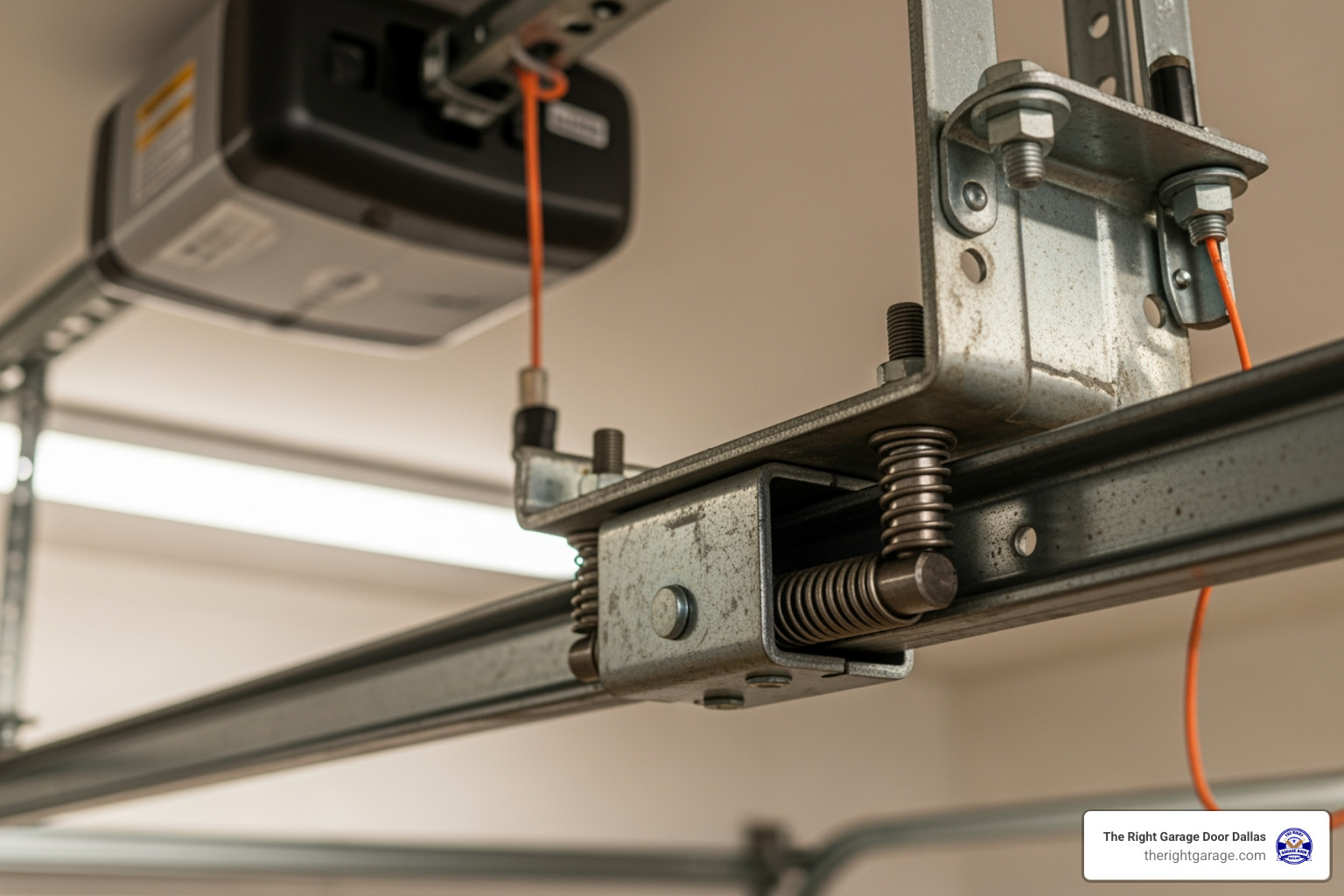
At its core, the emergency release is a red-handled cord (often with a T-shaped attachment) that hangs from the garage door opener’s main assembly. This cord is connected to a component called the “trolley,” which moves along a track and is typically attached to the garage door itself. The trolley, in turn, connects to the “carriage,” which is powered by your opener’s motor.
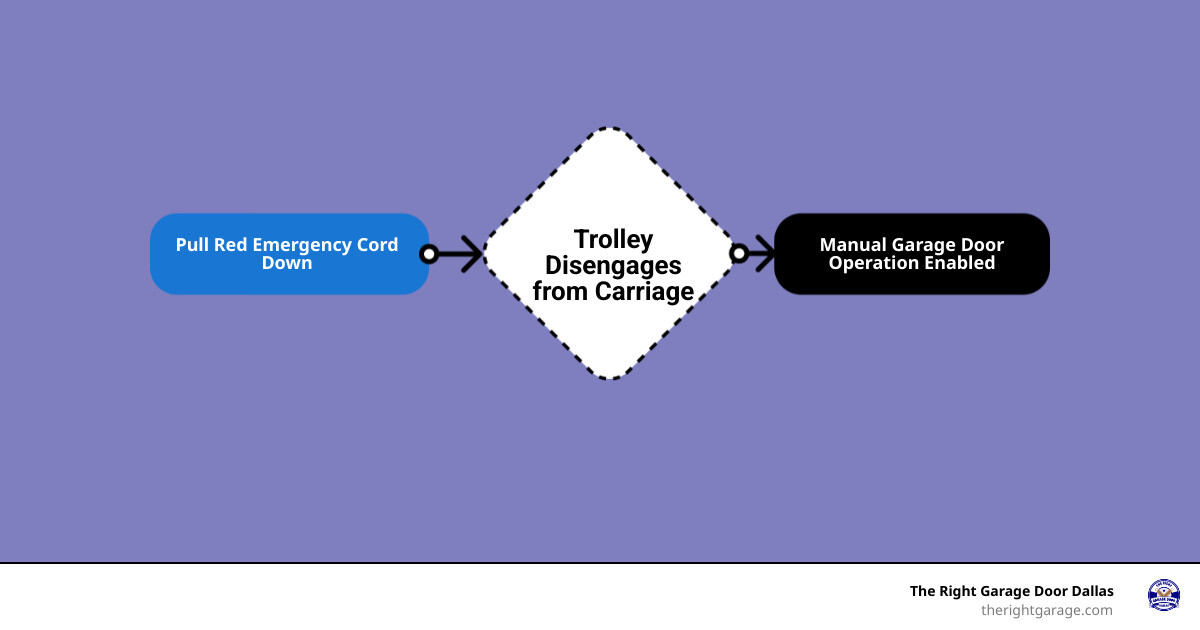
The primary purpose of this cord is to disengage the garage door from its opener motor. When you pull the cord, it disconnects the trolley from the carriage, effectively taking the automatic opener out of the equation. This allows you to manually open or close your garage door.
So, when should you use this handy red cord? There are a few key scenarios:
- Power Outages: The most common reason. If the power goes out in Dallas, Fort Worth, or any of our service areas, your automatic opener won’t work. The emergency release allows you to get your car out of (or into) the garage.
- Opener Failure: Sometimes, the opener motor itself might malfunction, even if the power is on. If your opener isn’t responding to your remote or wall button, the emergency release lets you bypass the faulty motor.
- Remote Malfunction: Dead batteries or a damaged remote can leave you stranded. While easily fixable, the emergency release offers immediate access.
- Maintenance or Inspection: If you need to test the door’s balance or inspect components without the opener’s assistance, disengaging it manually is necessary.
The emergency release allows for manual operation of your garage door, giving you control when the automatic system isn’t cooperating. It’s a lifesaver when you’re in a hurry or facing an unexpected situation.
Safety First: Critical Precautions
Before you ever reach for that red cord, we need to talk about safety. This isn’t just a suggestion; it’s a critical warning. Garage doors are heavy, complex machines, and mishandling them can lead to serious injury or damage.
The most important rule: Your garage door MUST be fully closed before you pull the emergency release cord. We cannot stress this enough. If the door is open, even partially, and you pull the cord, it can come crashing down with immense force.
Consider this: garage doors can weigh anywhere from 150 to a hefty 400 lbs, especially older wooden models common in some Dallas neighborhoods. Your automatic opener doesn’t actually lift this weight; a system of high-tension springs (torsion or extension springs) does the heavy lifting, counterbalancing the door’s weight. The opener just guides it. If a spring is broken, the opener might be the only thing holding that massive door up. Pull the cord when a spring is broken, and you’ve just released a free-falling, multi-hundred-pound slab of metal or wood. This is incredibly dangerous and can cause severe injury or even be fatal. If you suspect a broken spring (the door feels extremely heavy, or you heard a loud bang), do not pull the cord and call a professional immediately.
Always ensure the area around the garage door is clear of people, pets, and objects. When manually operating the door, be mindful of “pinch points” where the door sections meet as it moves. Keep your hands on the designated handles or the bottom edge of the door, away from the joints.
If your door is stuck in the open position, do not attempt to use the emergency release. This is a job for the pros. Operating a garage door manually can be a bit of a workout, so be prepared for some heavy lifting, and always maintain control. If you have any doubt about the door’s balance or condition, err on the side of caution and call us.
The Standard Procedure: How to Use and Reset the Release Cord
Alright, with safety firmly in mind, let’s walk through the standard process for using and resetting your emergency release cord. This is what you should do when the power’s out or your opener is acting up.
Disengaging the opener:
- Ensure the door is fully closed. Again, this is paramount for your safety.
- Locate the red emergency release cord. It’s usually a red rope or handle hanging from the trolley, which is the part of the opener mechanism attached to the door itself.
- Pull the cord straight down. Give it a firm, steady pull. You should hear a distinct “click” sound. This click signifies that the trolley has disconnected from the opener carriage, and the door is now in manual mode.
Manually lifting the door:
- Once disengaged, you can manually lift the garage door. Use the handles located on the bottom panel of the door, or grasp the bottom edge firmly.
- Lift evenly and with control. Garage doors are heavy, but if your springs are in good working order, it shouldn’t feel too heavy. It should be manageable. If it feels extremely heavy, stop and refer to the safety warnings about broken springs.
- Lift the door all the way up until it’s open, then ensure it stays in place. Most doors will stay open once fully lifted, but if yours starts to drift down, you’ll need to secure it with a prop.
Manually closing the door:
- To close the door, gently pull it down from the handles or bottom edge.
- Maintain control throughout the descent. Don’t let it slam. This helps prevent damage and injury.
- Once the door is fully closed, you might want to engage any manual slide locks or deadbolts on the door for added security, especially during extended power outages.
Re-engaging the Opener for Automatic Use
After you’ve manually operated your garage door, you’ll want to reconnect it to the automatic opener so you can go back to the convenience of your remote control.
- Ensure the garage door is fully closed. Just like disengaging, re-engaging should always happen with the door in the down position.
- Locate the red emergency release cord again.
- Pull the cord toward the door. This action compresses the spring lever on the trolley, preparing it to reconnect with the opener carriage. You might hear another click.
- Run the opener with your remote or wall button. Press the button as if you’re opening the door automatically. The opener carriage will move along the track, and when it meets the trolley, they should automatically re-engage. You should hear a loud click as they connect.
- Test with remote. After you hear the click, use your remote or wall button to run the door through a full open and close cycle to confirm everything is working correctly.
For a visual demonstration of this process, we recommend watching this helpful video: How To Open Your Garage Door Manually.
What to Do When Your Garage Door Emergency Release is Stuck
Now, for the main event: what happens when your garage door emergency release stuck? This is where things get a bit more tricky, but often, it’s something you can troubleshoot yourself.
Diagnosing Why the Cord or Door is Stuck
When your emergency release isn’t cooperating, the first step is to figure out why. Is the cord itself stuck, or did it pull, but the door still won’t budge?
If the cord won’t pull:
This usually indicates a jammed lever within the trolley mechanism or debris obstructing its movement. Sometimes, the spring that facilitates the release might be stiff or corroded. A visual inspection of the trolley area (you might need a stepladder) can reveal obvious issues.
If the door won’t move after release:
This is a more common scenario for a garage door emergency release stuck situation. You’ve pulled the cord, heard the click, but the door feels like it’s still bolted to the floor. Here are the usual suspects:
- Engaged Manual Lock: This is surprisingly frequent. Many garage doors, especially older models in Dallas, Fort Worth, or Plano, have manual slide locks or T-handle locks on the inside. If these are engaged, the door won’t move regardless of the emergency release.
- Misaligned Tracks: The metal tracks that guide your garage door can get bent, dented, or misaligned. This creates friction and can prevent the rollers from moving smoothly, making the door feel stuck.
- Broken Rollers: The rollers guide the door along the tracks. If they’re cracked, worn, or broken, they can jam and prevent movement.
- Broken Springs or Cables: As we mentioned, springs counterbalance the door’s weight. If a spring is broken, the door will feel incredibly heavy, as you’re now lifting its full weight without assistance. Cables (which are connected to the springs) can also fray or snap, causing the door to bind or become immovable.
- Obstructions: Sometimes, something as simple as a tool, a piece of wood, or even a stray ball can be wedged in the track or under the door, preventing movement.
- Opener Motor Complications: While the release cord disconnects the door from the motor, sometimes a severe motor issue (like a jammed gear) can indirectly affect the trolley’s movement, making it seem stuck.
Step-by-Step Fixes for a Garage Door Emergency Release Stuck
Once you’ve identified the potential problem, here’s how to try and fix your garage door emergency release stuck:
- Check Manual Slide Locks: This is the easiest fix! Look for any slide bolts or T-handle locks on the inside of the garage door, typically near the bottom or middle. Disengage them. A quick check here can save you a lot of headache.
- Inspect Tracks for Bends or Debris: Grab a flashlight and carefully examine both vertical and horizontal tracks. Look for any dents, bends, or obstructions like dirt, pebbles, or even small toys. Clean out any debris with a brush or cloth. If you see a minor bend, you might be able to gently tap it back into place with a rubber mallet, but be very cautious not to worsen the problem. For significant bends, professional help is best.
- Lubricate the Trolley Mechanism: If the cord itself feels stiff or the trolley isn’t moving freely, a light spray of silicone-based lubricant on the moving parts of the trolley and the track can work wonders. Avoid using WD-40 or heavy grease, as these can attract dirt and gunk up the mechanism over time.
- Gently Jiggle the Door to Align Rollers: If the door feels like it’s binding, try gently pushing and pulling the door side-to-side or up and down a few inches while simultaneously trying to move it manually. This can help misaligned rollers reseat themselves in the tracks.
- Test Door Balance: If the door is moving but feels extremely heavy or uneven, it’s likely a spring issue. To test balance, manually lift the door about halfway. If it stays put without assistance, your springs are probably fine. If it immediately slams shut or flies open, your springs are unbalanced or broken, and you should not attempt further DIY fixes.
Always proceed with caution. If you encounter significant resistance or notice any damage, it’s always safer to call a professional.
Troubleshooting a Garage Door Emergency Release Stuck After Re-engaging
Sometimes, you manage to use the emergency release, but then you have trouble re-engaging the opener. Or maybe the opener runs, but the door just sits there. Here’s what to do if your garage door emergency release stuck problem extends to re-engagement:
- Opener Runs But Door Doesn’t Move: If you hear the motor whirring but the door isn’t going anywhere, it means the trolley and carriage haven’t reconnected. Ensure the door is fully closed, then pull the red cord towards the door to compress the spring lever. Now, press your remote. The carriage should move and automatically hook back into the trolley. You should hear a distinct click.
- Trolley Not Re-engaging: If the automatic method doesn’t work, try this: manually close the door, pull the cord toward the door, then manually slide the door along its track until the trolley lines up and clicks back into the carriage.
- Resetting Opener Limits: After a manual operation or power outage, your opener’s internal “memory” of the door’s travel limits might get confused. Refer to your opener’s manual (or look it up online) for specific instructions on how to reset the travel limits. This often involves pressing a “learn” button and then running the door through a full open/close cycle.
- Checking for Error Codes on the Motor Unit: Many modern garage door openers (like LiftMaster, for example) have diagnostic lights or LED displays that blink in specific patterns to indicate an error code. These codes can point to issues like sensor misalignment, excessive force detection, or logic board problems. Consult your opener’s manual to decode these blinks and see if they reveal the root cause of your re-engagement trouble.
If these steps don’t resolve the issue, it’s a sign that the problem might be more complex than a simple re-engagement hiccup.
When to Call a Professional for Help
While we encourage homeowners in Dallas, Fort Worth, and the surrounding areas like Plano, Frisco, and Irving to understand their garage doors, there are definite limits to DIY. When it comes to a garage door emergency release stuck or other significant issues, knowing when to call a professional can save you time, money, and potentially prevent serious injury.
Here are the critical warning signs that mean it’s time to put down the tools and pick up the phone:
- Door feels extremely heavy after release: This is almost always a sign of a broken spring (torsion or extension). Garage door springs are under immense tension and can be incredibly dangerous to handle without specialized tools and training. Attempting to fix a broken spring yourself can lead to severe injury.
- Visible broken springs or frayed cables: If you see a gap in a torsion spring above your door, or if the cables running along the sides of the door are frayed, loose, or broken, do not attempt to operate the door. These components are vital for balancing the door’s weight, and their failure can cause the door to crash down unexpectedly.
- Door slams down after release: This indicates a severe balance issue, likely due to broken or weakened springs. Again, this is extremely dangerous.
- You see bent tracks or significant damage: While minor debris can be cleared, severely bent or damaged tracks can cause the door to bind, derail, or even fall. Repairing these often requires specialized tools and expertise to ensure proper alignment.
- DIY troubleshooting fails: You’ve followed our steps, but your garage door emergency release stuck problem persists, or the door still isn’t operating correctly. Sometimes, the issue is internal to the opener motor, a faulty circuit board, or a more complex mechanical problem that requires a trained eye.
We’ve covered the Top 5 Signs You Need Garage Door Repair in Dallas, TX in another article, and many of these scenarios apply here. Our licensed technicians at The Right Garage Door Dallas are equipped to safely diagnose and repair these complex issues, ensuring your garage door operates smoothly and safely.
Frequently Asked Questions about the Emergency Release
We hear a lot of questions about the emergency release cord. Here are some of the most common ones, answered by our experts.
How can I test my emergency release cord to ensure it’s functional?
It’s a great idea to test your emergency release periodically, just like you would test a smoke detector. We recommend doing this every few months to ensure you’re prepared for a power outage or opener malfunction.
- Close the door fully. Safety first!
- Pull the emergency release cord. You should hear that distinct click.
- Manually lift the door a few feet. It should feel manageable and stay in place if your springs are balanced.
- Close the door.
- Re-engage the opener by pulling the cord toward the door and running the opener with your remote.
- Test the opener with your remote to ensure it’s fully reconnected and operating automatically.
If the door feels extremely heavy, doesn’t stay open, or the opener struggles to re-engage, it’s time to call us for an inspection.
What happens if I pull the release cord while the garage door is open?
This is an extremely dangerous situation and something you should never do. If you pull the emergency release cord while the garage door is open, you are disconnecting the door from the opener motor, which is likely the only thing holding it in place (especially if the springs are broken or worn). The door can crash down immediately and with significant force. This poses a severe risk of serious injury to anyone underneath or near the door, and it can cause extensive damage to the door itself, your vehicle, or other property. Always ensure the door is fully closed before touching that red cord.
Can I lubricate the emergency release mechanism?
Yes, you can and should lightly lubricate the moving parts of the trolley mechanism where the emergency release cord connects. A light spray of silicone-based lubricant is ideal. This can help prevent the mechanism from becoming stiff or getting a garage door emergency release stuck in the future. Apply it to the pivot points and any sliding components on the trolley. Avoid using heavy grease or oil, as these can attract dirt and dust, eventually causing more problems than they solve. And as mentioned before, never use WD-40 as a lubricant for garage door parts; it’s a degreaser and can strip away existing lubrication.
Regular maintenance, including proper lubrication, is key to keeping your garage door system running smoothly. You can Learn more about our maintenance services and how we can help keep your garage door in top shape.
Conclusion
Dealing with a garage door emergency release stuck can be frustrating, but understanding how your system works and knowing these troubleshooting steps can empower you to handle many common issues. Safety is always paramount. Always ensure the door is closed before disengaging, and never hesitate to call for professional help when in doubt.
A functional emergency release is a critical safety feature, ensuring you can access your garage even when technology fails. If you find yourself facing persistent issues, suspect a broken spring, or simply prefer the peace of mind that comes with expert service, trust the professionals. For reliable, fast, and local garage door repair, installation, and maintenance in the Dallas-Fort Worth area, The Right Garage Door Dallas is here to help.
Don’t let a stuck garage door ruin your day. Get a free quote for your garage door services today and let us get your garage door back on track!


