

Why That Loud Bang Isn’t Something to Ignore
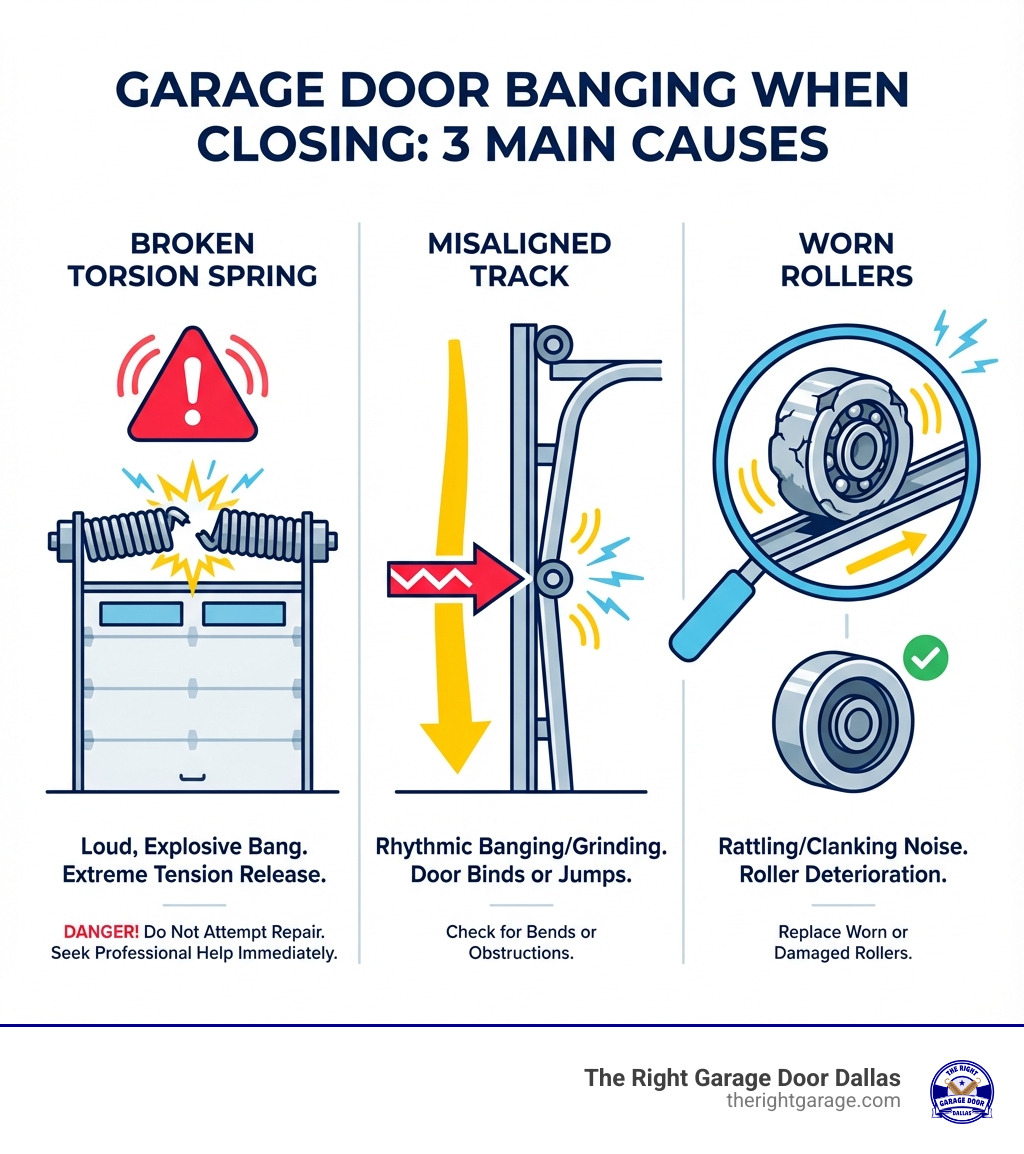
If your garage door makes a banging noise when closing, you’re likely dealing with one of these common issues:
- Broken or failing torsion spring – Creates a loud, single bang as tension releases
- Worn rollers or misaligned tracks – Causes rhythmic banging or grinding sounds
- Loose hardware – Results in rattling or clanking as the door moves
- Incorrect opener force settings – Makes the door slam shut too hard
There’s nothing quite like hitting the button to close your garage door and hearing a loud, jarring bang that makes you wince. Maybe it’s a single, sharp crack that echoes through your garage. Or perhaps it’s a rhythmic thunking that happens every time the door moves. Either way, that noise is your garage door’s way of telling you something is wrong.
These sounds aren’t just annoying—they’re warning signs. A loud bang usually means a torsion spring has broken or is about to fail. Springs counterbalance the door’s weight, and when they snap, the release of tension creates that explosive noise. If your door is making a banging sound as it closes, it could also mean your tracks are misaligned, your rollers are worn out, or your opener is straining under too much weight.
The good news? Most banging noises have fixable causes. Some you can tackle yourself with basic tools and a little know-how. Others—especially anything involving springs—require a professional’s expertise for your safety.
Never attempt to adjust or replace garage door springs yourself. Springs are under extreme tension and can cause serious injury if handled incorrectly. If you hear a loud bang and suspect a broken spring, disconnect your opener and call a technician immediately.
This guide will walk you through identifying what’s causing your garage door to bang when closing, which fixes you can safely attempt, and when it’s time to call in the pros. For Dallas-Fort Worth homeowners, addressing this issue quickly means restoring your home’s security and your peace of mind.
Why Your Garage Door Makes a Banging Noise When Closing: Common Culprits
When your garage door starts sounding like a percussion section, it’s usually a sign that one or more components are struggling. Understanding the most common culprits can help us pinpoint the problem. Garage doors are complex systems with many moving parts, and a failure in one area can easily lead to a symphony of unwanted sounds.
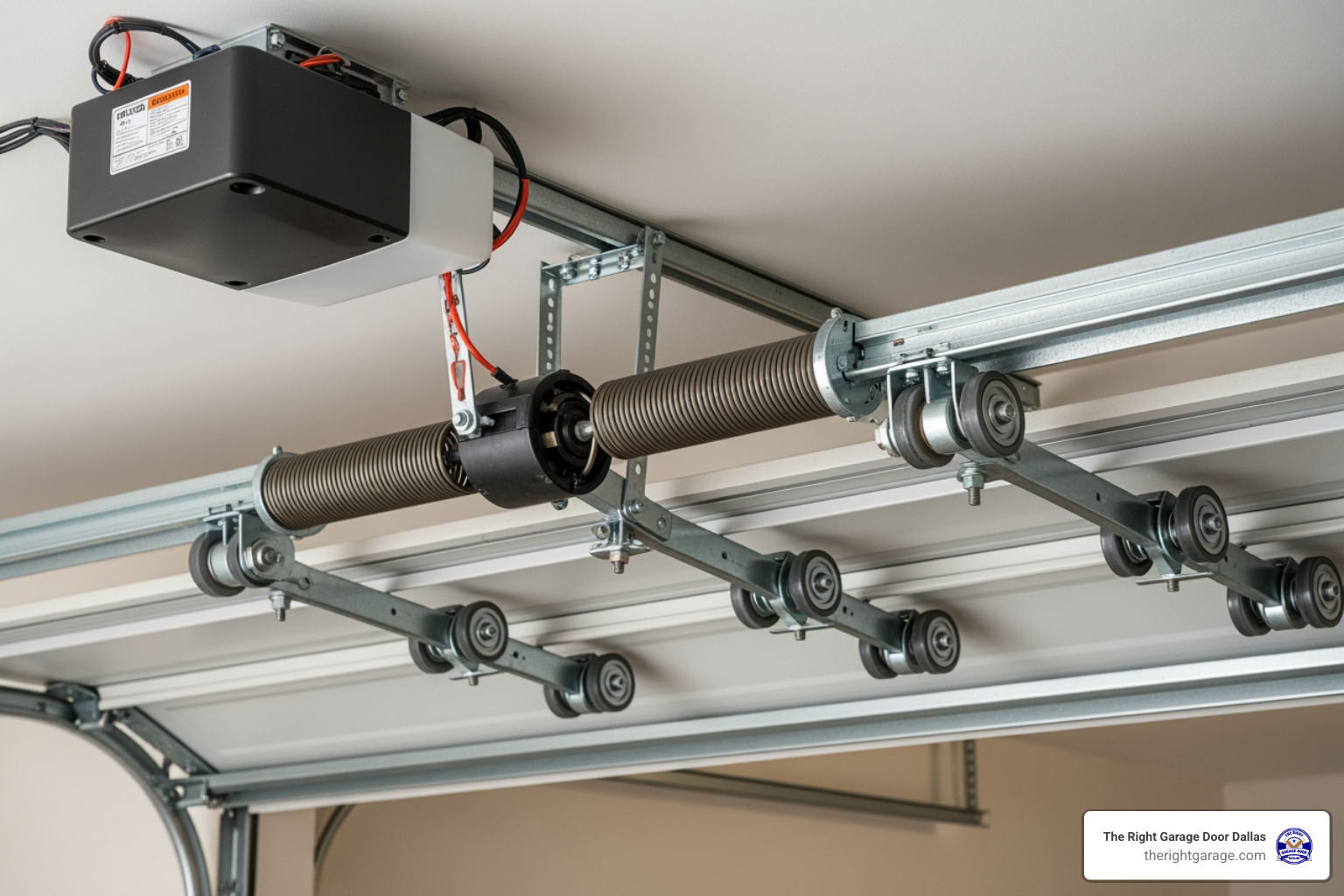
From the powerful springs that hoist the door’s considerable weight to the intricate opener mechanism, each part plays a crucial role. When any of these components are worn, damaged, or out of alignment, the result can be a jarring banging noise when closing.
The Role of Garage Door Springs
The springs are arguably the most vital components of your garage door system, responsible for counterbalancing the door’s immense weight (which can range from 130 to 400 pounds!). Without properly functioning springs, your garage door opener would struggle immensely, or worse, your door could come crashing down.
A loud, sudden bang is almost always a tell-tale sign of a broken torsion spring. These springs, typically located on a metal shaft directly above your garage door, are under extreme tension. When one snaps, the sudden release of this stored energy creates that alarming sound. If a torsion spring breaks, you might notice your door suddenly feels incredibly heavy, struggles to close smoothly, or even slams shut. The door might bang on the floor because it lacks the necessary tension to open and close correctly. In some cases, a broken spring will also cause the cables to drop off the drums, leaving them loose or dangling on both sides of the garage door.
While less common to cause a single “bang,” worn-out extension springs (found along the sides or above the horizontal tracks) can also contribute to noise. If your door is off-balance due to failing extension springs, you might hear popping sounds as the opener struggles to compensate for the uneven weight distribution. These springs, like torsion springs, are critical for stable weight distribution.
Issues with Tracks, Rollers, and Hinges
Beyond the springs, many other components work in harmony to ensure smooth operation. When this harmony is disrupted, a banging noise can occur.
- Misaligned Tracks: Imagine a train trying to run on twisted tracks – it’s going to make a racket. Similarly, if your garage door tracks are bent, have gaps, or are simply not parallel, the rollers will struggle to move smoothly. This often results in a grinding, scraping, or rhythmic thunking sound as the door closes. A door that sticks or grinds because of misaligned tracks is a common issue. Even subtle misalignment can cause rollers to bump and create significant noise.
- Worn-Out Rollers: Rollers are the unsung heroes of your garage door, guiding it along the tracks every time it opens or closes. However, they are also often the first parts to wear out. Steel rollers, while durable, can rust and develop flat spots or become stiff, leading to a banging noise as they catch or grind within the tracks. If your garage door makes a banging noise because its rollers are worn out, it’s a clear sign for inspection. Upgrading to quieter nylon rollers can often provide a noticeable improvement.
- Loose or Broken Hinges: The hinges connect the individual panels of your garage door. Over time, the nuts and bolts holding these hinges can loosen, causing the door panels to shift or rattle as they move. A garage door that rattles when opening or closing due to loose hinges is a very common scenario. If a hinge is bent or broken, it can cause the door panel to catch on the frame or track, leading to a distinct banging or clanking sound.
- Lack of Lubrication: Sometimes, the simplest fix is the most overlooked. High-pitched noises, grinding, or general creaking can often be attributed to dry, unlubricated moving parts like rollers, hinges, and springs. Metal-on-metal friction creates noise, and a lack of proper lubrication exacerbates this, sometimes causing components to bind and then release with a bang.
For a clearer idea of what some of these noises can sound like, you might find this brief video of a rhythmic banging noise helpful, although it primarily illustrates a sound heard when raising the door, the principle of a rhythmic mechanical noise applies.
Problems with the Garage Door Opener
The opener is the brain and muscle behind your garage door’s automated movement. If it’s not working correctly, it can certainly contribute to a banging noise when closing.
- Incorrect Force Settings: Modern garage door openers have adjustable force settings that dictate how much power the motor applies to open and close the door. If the “down force” setting is too high, the door might hit the ground with excessive force, creating a jarring bang. Conversely, if the “up force” is too low, the opener might strain, especially if the door is heavy or off-balance. These settings can be affected by accidental changes, power surges, or even seasonal temperature fluctuations.
- Worn Gears in Opener: Inside the opener’s motor housing, there are gears that drive the chain or belt. If these gears, particularly plastic ones, become worn or a tooth breaks off, it can cause a rhythmic thunking or banging sound as the opener operates. This is a specific mechanical failure that often points to the need for opener repair or replacement.
- Loose Chain or Belt: Chain-drive openers are known for being louder than their belt-drive counterparts. If the chain or belt becomes too loose, it can slap against the rail or other components during operation, creating a banging or rattling sound. A chain drive that sounds like it’s dragging is a clear indicator of a potential issue. Belt drives, while generally quieter, can also slip in extreme temperatures, potentially causing scraping noises.
- Opener Arm Connection: The arm connecting the opener trolley to the garage door itself can also be a source of noise. If there’s too much play in this mechanism or if the arm is bent or improperly secured, it can create a jolting “caclunk” noise as the door starts or stops, especially when closing. A sloppy trolley fit on the rail can exacerbate this.
Safety First: Initial Troubleshooting Steps
Before we dive into potential fixes, we cannot stress enough the importance of safety. Garage doors, with their heavy weight and high-tension springs, can be incredibly dangerous if not handled properly. Our priority, and yours, is always to avoid injury.
Always remember this crucial warning: Damaged or worn-out springs require expert replacement because they hold up your garage door. If these fail, your door may fall and cause damage or injury. Doing this yourself can pose too much risk, making your garage unsafe to use over the long run. As the experts remind us, a door may fall and cause damage or injury.
Here are the initial steps you should take, always prioritizing your safety:
- Disconnect the Opener: This is the first and most critical step. Pull the emergency release cord (usually a red handle dangling from the opener trolley) to disengage the door from the automatic opener. This allows you to operate the door manually and prevents accidental activation while you’re inspecting it.
- Visual Inspection: With the door disconnected, visually inspect the entire system. Look for anything obvious: bent tracks, frayed cables, broken springs (often visible as a gap in the coiled spring), loose hinges, or rollers that are off track.
- Listen for the Source: Try to pinpoint exactly where the banging noise is coming from. Is it the door itself, the tracks, the springs, or the opener unit (if you reconnect it briefly and try closing manually while listening carefully)?
- Check for Loose Hardware: Gently wiggle hinges, roller brackets, and mounting brackets along the tracks. Any loose nuts or bolts can cause rattling or banging.
Performing a Balance Test
A perfectly balanced garage door should feel almost weightless when operated manually. This test is crucial for diagnosing spring issues.
- Disconnect the Door from the Opener: As mentioned, pull the emergency release cord.
- Manually Lift the Door Halfway: Carefully lift the garage door by hand until it’s about halfway open.
- Check if the Door Stays in Place: Release the door. If it stays put, your springs are likely well-balanced. If it drifts down on its own, the springs are too loose or worn out, indicating a heavy door. If it flies upward, the springs are too tight. An off-balance door means the springs aren’t properly supporting the weight, forcing the opener to work harder and potentially causing noises.
Inspecting the Hardware and Tracks
With the door disconnected and the balance checked, it’s time for a closer look at the physical components.
- Looking for Loose Nuts and Bolts: Systematically go along all the hinges, roller brackets, and the brackets holding the tracks to the wall. Use a wrench or socket set to gently tighten any loose nuts or bolts. Be careful not to overtighten, as this can strip threads or damage components. Loose nuts and bolts that hold the garage door in place can make a screeching or banging sound when the door operates.
- Checking for Bent or Damaged Tracks: Inspect the entire length of the tracks for any bends, dents, or gaps where the sections join. Even a slight misalignment can cause rollers to catch and create noise. If the tracks are severely bent, they may need professional attention.
- Clearing Debris from Tracks: Dust, dirt, cobwebs, and even hardened grease can accumulate in the tracks, obstructing the smooth movement of the rollers. Use a dry cloth to wipe them clean, and a stiff brush or plastic scraper for any stubborn grime. You should avoid applying lubricant to the tracks themselves, as this tends to attract more dirt.
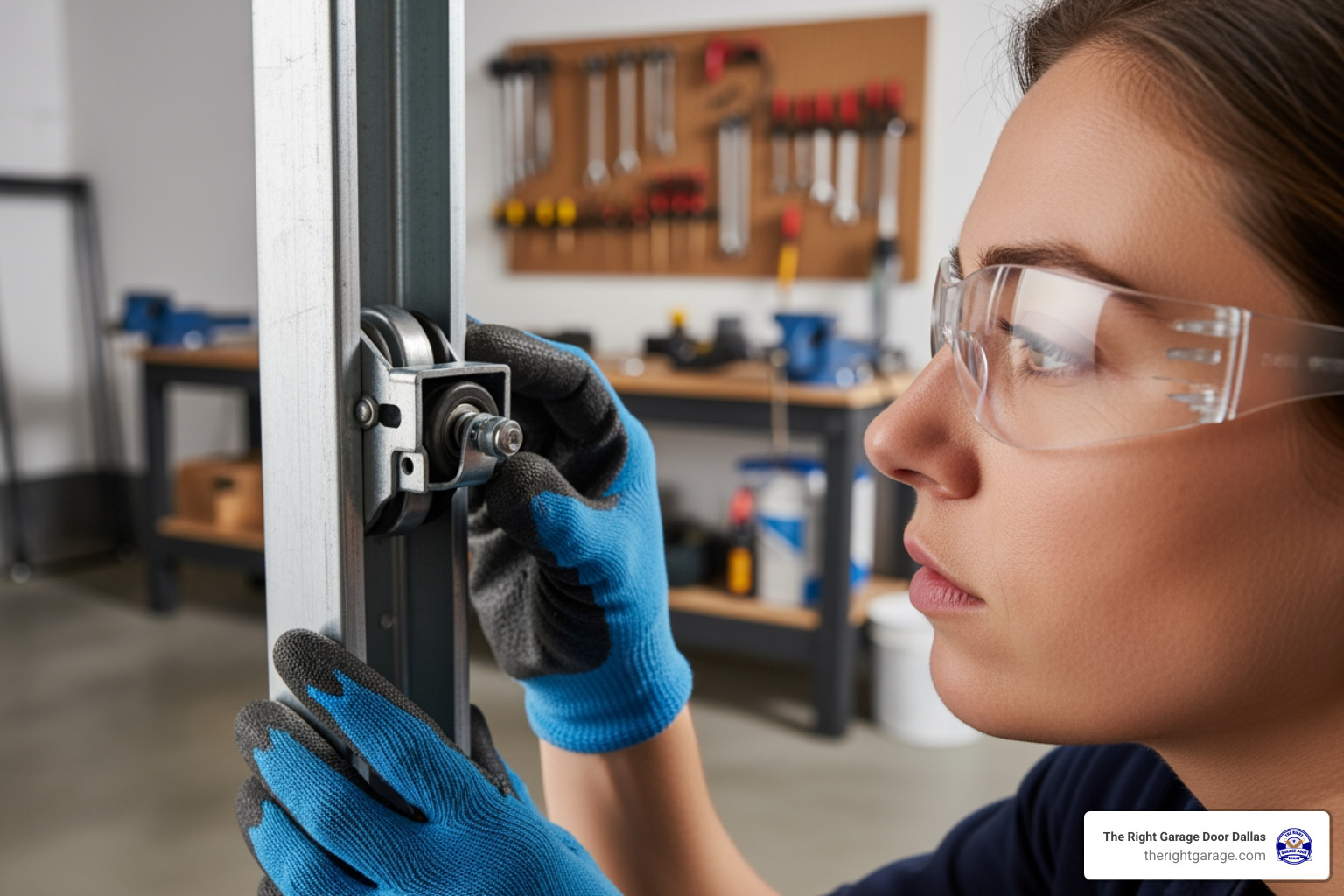
- Examining Rollers for Wear or Cracks: Rollers should spin freely. Inspect each roller for signs of wear: rust, flat spots, cracks in the nylon, or wheels that are locked up. Worn rollers are a common source of grinding or banging noises.
Silencing the Slam: DIY Fixes vs. Professional Repair
Now that we’ve identified potential issues, let’s talk about how to tackle them. Some tasks are perfectly safe for a homeowner to perform, while others are best left to the trained hands of a professional.
DIY Fixes for a Garage Door That Makes a Banging Noise When Closing
If your initial troubleshooting points to minor issues, you might be able to quiet that banging with some basic DIY maintenance.
Here’s what you’ll need for most DIY tasks:
- Wrench set
- Socket set
- Silicone-based lubricant (or white lithium grease)
- Work gloves
- Safety glasses
- Stiff brush or plastic scraper
Here are some fixes you can safely attempt:
- Tightening Loose Nuts and Bolts: Armed with your wrench and socket set, go through every visible nut and bolt on your garage door system—especially on the hinges, roller brackets, and track mounting brackets. Tighten them snugly, but be careful not to overtighten, which could strip threads or deform components. A garage door can have more than 100 nuts, bolts, and screws, so this might take a little while!
- Lubricating Hinges, Rollers, and Springs: Proper lubrication is the single most effective way to reduce noise. We recommend lubricating all moving metal parts at least once or twice a year, or more frequently in dusty or humid environments like our North Texas climate.
- Hinges: Spray a silicone-based lubricant or white lithium grease on the pivot points of all hinges.
- Rollers: For metal rollers, apply lubricant to the bearings (where the roller shaft meets the wheel). For nylon rollers, a light mist of silicone spray on the shaft is usually sufficient, but avoid spraying the nylon wheel itself if it’s meant to be dry.
- Springs: Lubricate torsion springs (the large springs above the door) and extension springs (along the sides) with a silicone-based spray. This helps reduce friction as they coil and uncoil.
- Opener Chain/Belt: For chain drives, apply white lithium grease to the chain itself. For belt drives, a silicone spray on the belt can reduce friction.
Crucial Tip: Do NOT use WD-40 as a lubricant for your garage door. While it’s a great penetrant, it’s not a long-lasting lubricant and can actually attract dirt and dust, worsening the problem over time. Use products specifically designed for garage doors, such as silicone-based sprays or white lithium grease.
- Cleaning Tracks: After disconnecting the opener and performing a visual inspection, use a stiff brush or a damp cloth to clean out any dirt, dust, or hardened grease from the interior of the tracks. For stubborn grime, a plastic scraper can be effective. Leave the tracks dry; lubricant on the tracks can attract debris and lead to more problems.
- Adjusting Opener Force Settings: If your door is banging as it hits the ground, the downward force setting on your opener might be too high. Consult your garage door opener’s manual to locate the “down force” or “close force” adjustment dial or buttons. Make small adjustments (e.g., a quarter turn or a single button press) and then test the door. The door should reverse if it encounters an obstruction, but it shouldn’t slam shut with excessive force.
When to Call a Professional for a Garage Door That Makes a Banging Noise When Closing
While DIY fixes can resolve many minor noise issues, some problems are too complex or dangerous for a homeowner to tackle. This is where the experienced technicians at The Right Garage Door Dallas come in.
You should always call a professional if you encounter:
- Broken Springs: As discussed, broken torsion springs are extremely dangerous due to the high tension involved. Never attempt to replace them yourself. If you hear that loud bang and see a gap in your spring, or if your door feels incredibly heavy, it’s time to call us immediately.
- Frayed or Broken Cables: The cables work in conjunction with the springs to lift and lower the door. If these are frayed, snapped, or have come off the drums, the door can become unbalanced and dangerous. Like springs, cables are under high tension.
- Severely Bent or Damaged Tracks: While minor track adjustments can sometimes be DIY, severely bent, dented, or warped tracks can cause significant operational issues and require specialized tools and expertise to repair or replace.
- Opener Motor Repair: If you’ve isolated the banging noise to the opener motor housing itself (e.g., rhythmic thunking from worn gears or a straining motor that’s not due to force settings), this typically requires a professional.
- Persistent Noise After DIY Attempts: If you’ve tried all the safe DIY troubleshooting and fixes, and your garage door still makes a banging noise when closing, it’s a clear signal that a more complex underlying issue is at play. Our licensed technicians can diagnose and resolve these stubborn problems.
For more insights into when professional help is essential, you can read our article on Top 5 Signs You Need Garage Door Repair in Dallas, TX.
Here’s a quick guide to help you decide:
| DIY Tasks (Safe for Homeowners) | Professional Tasks (Call an Expert) |
|---|---|
| Lubricating rollers, hinges, and springs | Replacing broken torsion or extension springs |
| Tightening loose nuts, bolts, and screws | Repairing or replacing frayed/snapped cables |
| Cleaning debris from tracks | Realigning severely bent or damaged tracks |
| Adjusting opener force settings (small increments) | Repairing or replacing opener motor gears/components |
| Replacing worn-out rollers (if easily accessible) | Fixing doors that are off-track and binding |
| Inspecting for obvious visual damage | Diagnosing complex electrical or sensor issues |
| Comprehensive annual maintenance and safety checks |
The Quiet Treatment: How Regular Maintenance Prevents Banging Noises
An ounce of prevention is worth a pound of cure, and this certainly applies to your garage door. Regular maintenance is key to keeping your door running smoothly, quietly, and safely for years to come. It’s not just about fixing problems when they arise, but preventing them in the first place.
Here’s how you can keep your garage door in top shape and ward off those dreaded banging noises:
- Annual Professional Tune-Up: While some tasks are DIY-friendly, we highly recommend an annual professional tune-up. Our licensed technicians will perform a thorough inspection, lubricate all critical components, check spring tension, and make any necessary adjustments. This comprehensive service can catch small issues before they become expensive problems.
- Semi-Annual Lubrication Schedule: Make lubrication a habit! We advise lubricating all moving metal parts of your garage door at least once or twice a year. If you live in an area with extreme temperatures (like our Dallas summers and occasional winter freezes) or high humidity, consider a seasonal lubrication (every four months) to ensure optimal performance.
- Importance of Silicone or Lithium Grease: As we mentioned, the type of lubricant matters. Use a silicone-based spray or white lithium grease. White lithium grease is excellent for metal-on-metal contact points like hinge pins and roller bearings. Silicone-based spray is ideal for metal-on-non-metal parts, such as lightly misting tracks for nylon rollers or keeping rubber weatherstripping pliable.
- Avoiding WD-40: It bears repeating: WD-40 is not a lubricant. It’s designed to displace water and loosen rusted parts. While it might offer temporary relief, it quickly evaporates and can attract dust and grime, ultimately making your noise problem worse.
- Inspect Weatherstripping: The weatherstripping along the bottom of your garage door and around the perimeter helps seal out elements. If it becomes stiff, cracked, or worn, it can cause the door to bang against the ground or frame as it closes. Inspect it regularly and replace it if it’s no longer flexible or intact. Cold and humid air can cause the garage door to bang when closing and affect these components.
- Testing Safety Features: Regularly test your garage door’s safety sensors and the auto-reverse mechanism. This ensures they are functioning correctly, preventing accidents and further damage to your door.
Investing a little time in maintenance can save you a lot of headaches and money down the road. For more details on our preventative services, please visit our page on More about our maintenance services.
Frequently Asked Questions about Banging Garage Doors
What does it mean when a garage door makes a loud bang when closing?
A loud, single bang often signifies a broken torsion spring. The sound is the spring releasing its stored energy. This is a serious issue that requires immediate professional attention as the door is no longer properly counterbalanced and can be dangerous.
Can I use my garage door if it makes a banging noise?
It is not recommended. A banging noise indicates a significant mechanical problem, most often with the springs that support the door’s weight. Continuing to operate the door can cause further damage to the opener and tracks, and poses a serious safety risk.
How much does it cost to fix a banging garage door?
Costs vary depending on the cause. Simple fixes like lubrication or tightening bolts are inexpensive DIY tasks. However, if the bang is from a broken spring, professional replacement can average around $250-$450. It’s best to get an upfront quote from a qualified technician.
Your Guide to a Quieter, Safer Garage Door
That unsettling banging noise when closing your garage door is more than just an annoyance—it’s a critical warning sign that your system needs attention. As we’ve explored, the culprits can range from a snapped spring or misaligned tracks to worn rollers or an overburdened opener. The good news is that most of these issues are fixable, and addressing them promptly will restore peace to your home and extend the life of your garage door.
Safety is paramount. While simple tasks like tightening hardware and lubricating components are within reach for many homeowners, anything involving the high-tension springs or complex opener repairs should always be handled by certified professionals. Continuing to operate a door with a serious underlying issue, especially a broken spring, can lead to further damage, costly repairs, and, most importantly, dangerous situations.
The value of regular maintenance cannot be overstated. A consistent schedule of lubrication, inspection, and professional tune-ups will keep your garage door operating smoothly and quietly, preventing those jarring bangs before they even start.
For residents in the Dallas-Fort Worth area, The Right Garage Door Dallas provides expert, same-day service for all garage door issues. Our licensed technicians are equipped with the knowledge and tools to diagnose and resolve any problem, ensuring your garage door is safe, secure, and silent. Don’t let a banging garage door disrupt your day or compromise your home’s safety.
Contact us for professional garage door services today, and let us bring harmony back to your garage!


