

Why Understanding Your Garage Door’s Emergency Release is Essential
The garage door opener emergency release cord is a red-handled cord that disconnects the door from the automatic opener, allowing you to operate it manually during power outages or opener malfunctions.
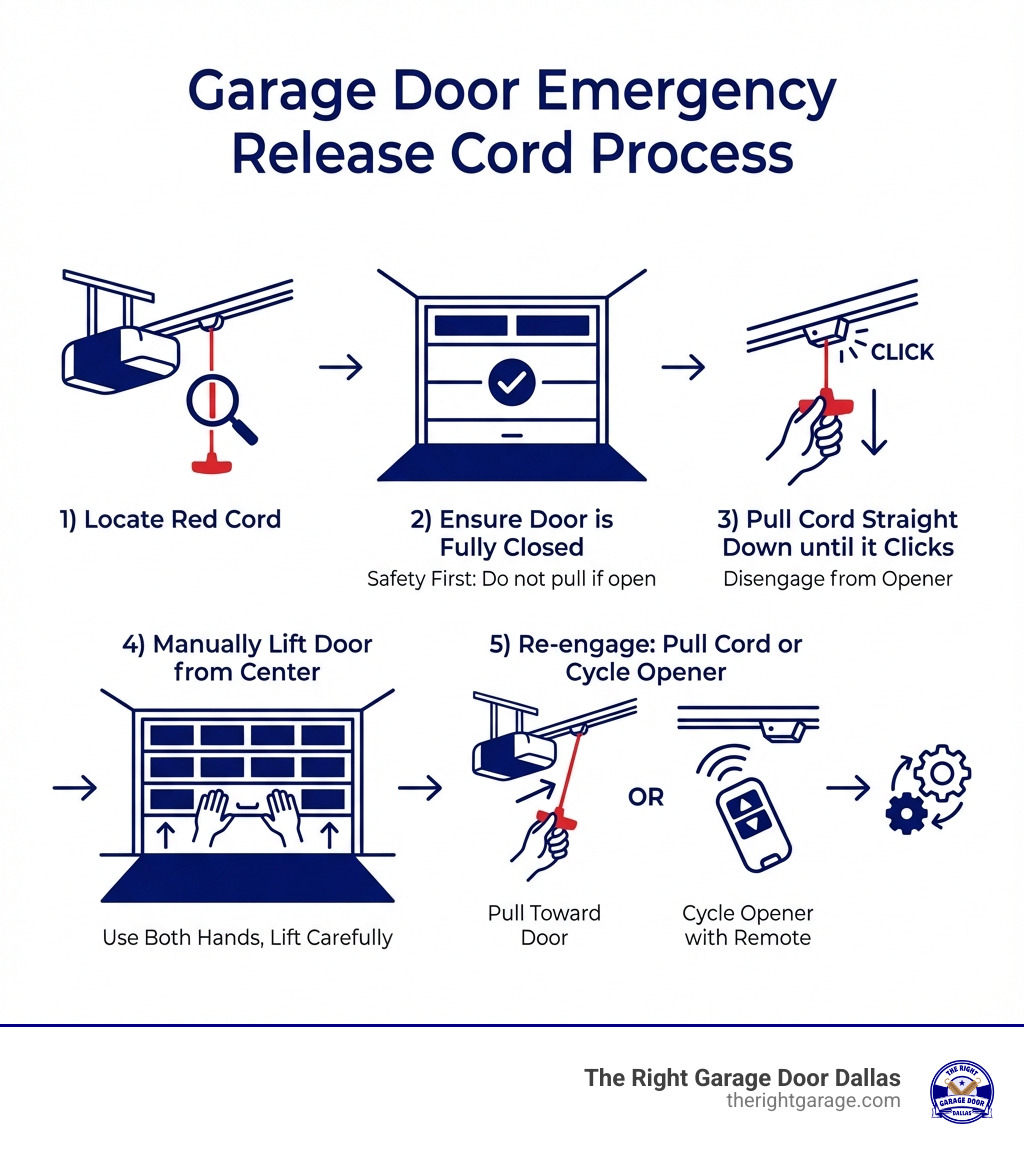
How to Use Your Emergency Release Cord:
- Ensure the door is fully closed – Never pull the cord when the door is open
- Pull the cord straight down firmly – You’ll hear a click as it disengages
- Manually lift the door – Use both hands and lift from the center
- To re-engage – Pull the cord toward the door or use your remote to cycle the opener
When You Need It:
- Power outages preventing opener operation
- Malfunctioning opener motor
- Broken remote control
- Emergency situations requiring quick access
You’re late for work, you hit the garage door button, and… nothing. The opener has malfunctioned, and the door is stuck shut.
This is why every homeowner needs to know how to use their emergency release cord. This simple safety mechanism can be the difference between getting to work on time and being stranded.
The emergency release cord disconnects your garage door from the automatic opener, giving you manual control when the system fails. That red cord isn’t just decorative – it’s your backup plan.
However, using the emergency release cord incorrectly can be dangerous. Pulling it at the wrong time can cause the heavy door to slam shut, risking injury or property damage.
In this guide, we’ll walk you through everything you need to know about your garage door’s emergency release system. Whether you’re dealing with a power outage in Dallas or a malfunctioning opener, you’ll know exactly what to do.
What is a Garage Door Emergency Release Cord and When Should You Use It?
The garage door opener emergency release cord is a crucial safety mechanism that allows you to operate your garage door manually when the automatic system fails. It disengages the door from the electric opener, giving you immediate manual access. This little red cord can be a lifesaver when you need to get your car out and your automatic system is down.
Understanding the Mechanism
The opener motor on your ceiling drives a carriage along a metal opener rail. This carriage connects to a trolley attached to your garage door. When you pull the garage door opener emergency release cord, it disconnects the trolley from the carriage. This allows the door to move freely along its tracks, ensuring you’re never locked in or out during a power failure or opener malfunction.
The garage door opener doesn’t lift the door’s full weight; that’s the job of the springs and cables. These components are under immense tension and make a balanced door feel relatively light when operated manually. A “balanced door” will stay put when lifted halfway, making it much easier to lift after pulling the emergency release.
Key Scenarios for Use
Homeowners in Dallas and North Texas often ask when to use this feature. Pulling the garage door opener emergency release cord is necessary in these key situations:
- During a power outage: This is the most common reason. When the electricity goes out, your automatic opener is useless. The emergency release cord allows you to manually open and close your garage door.
- When the opener motor is humming but not moving the door: If you hear the opener working but the door isn’t moving, it’s a sign of a malfunction. Disconnecting it lets you check for obstructions or mechanical issues.
- If the door is stuck shut and the opener is unresponsive: Whether due to a broken remote or an internal opener failure, the emergency release is your go-to solution.
- For routine maintenance and balance testing: We recommend testing your door’s balance by pulling the emergency release and manually lifting the door to see if it stays in place. This helps identify if your springs need attention. For more on when your door needs professional help, check our insights on More info about garage door repair.
- When the opener is showing signs of malfunction: Strange noises (grinding, banging), erratic movement, or needing to hold the wall button down are all signs you might need to use the emergency release to assess the situation.
Safety First: Critical Precautions Before You Pull
While the garage door opener emergency release cord is a crucial safety feature, using it incorrectly can be a serious hazard. Our top priority for homeowners in Dallas and Fort Worth is safety, so please follow these precautions.
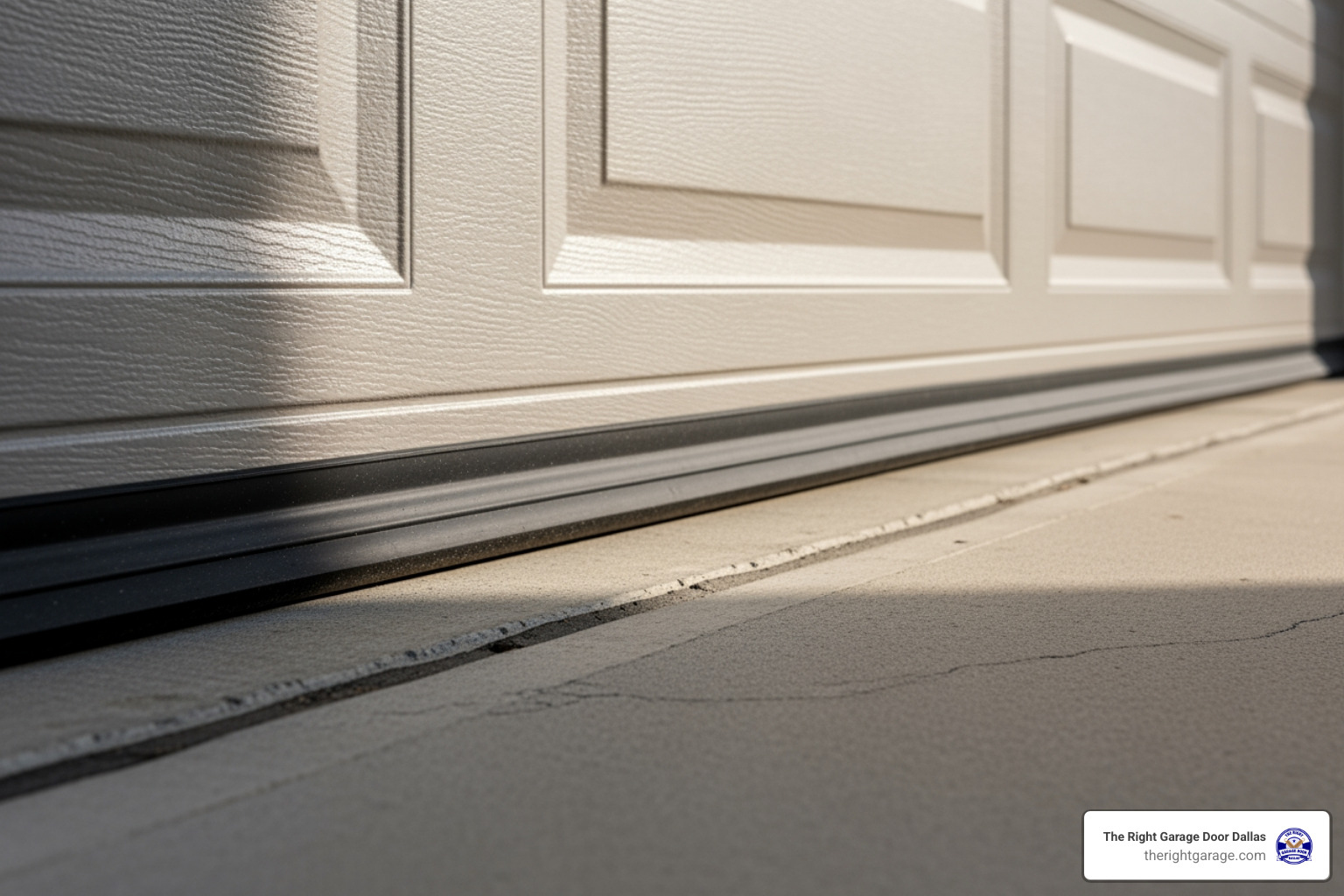
The most critical rule is: The door must be fully closed before you pull the emergency release cord. If you pull the cord with the door open, it can slam shut. Garage doors are incredibly heavy (100-500 pounds), and a falling door can cause severe injury or property damage.
If your garage door is stuck open, do not attempt to disengage the opener. This is extremely dangerous, as the opener might be the only thing holding the door up, likely due to a broken spring. This is a job for professionals.
Before you touch the red cord:
- Check for obstructions: Ensure nothing is in the door’s path.
- Be aware of an unbalanced door: If the door feels heavy, the springs may be compromised, and you need professional help.
- Keep fingers clear of tracks: Be mindful of pinch points along the tracks and between door panels.
How to Test Your Emergency Release System
We recommend periodically testing your garage door opener emergency release cord.
- Unplug the opener: Disconnect the power for safety.
- Ensure the door is fully closed: This is non-negotiable.
- Pull the emergency release cord: Pull the red cord straight down until you hear a click.
- Manually lift the door halfway: A balanced door should feel light and stay in place. If it’s heavy or falls, you likely have a broken spring and need professional service.
- Re-engage the opener: Follow the steps below to reconnect your opener.
Regular testing helps catch issues early. For more on maintenance, visit our FAQ page.
Risks of Misuse or Improper Re-engagement
Misusing the garage door opener emergency release cord or failing to re-engage it properly can lead to several problems:
- Damage to opener or door: Pulling the cord with the door open can cause it to slam, damaging tracks, rollers, or panels. Improper re-engagement can also strain the opener’s motor.
- Misaligned trolley: If not re-engaged correctly, the trolley can prevent smooth operation and cause further damage.
- Opener runs but door doesn’t move: If not re-engaged, the motor will run without moving the door, causing unnecessary wear on the opener.
- Security risks: A disconnected door isn’t locked by the opener. If you don’t use a manual lock, your garage is vulnerable. Always re-engage the opener or manually lock the door.
These issues are common in Plano and Frisco but are avoidable with proper care.
Your Step-by-Step Guide to Using the Garage Door Opener Emergency Release Cord
When the power goes out or your opener fails, these steps will make the situation manageable.
Step 1: How to Safely Pull the Garage Door Opener Emergency Release Cord
- Ensure the Garage Door is Fully Closed: As we’ve emphasized, this is the golden rule. Make sure the door is completely down before proceeding.
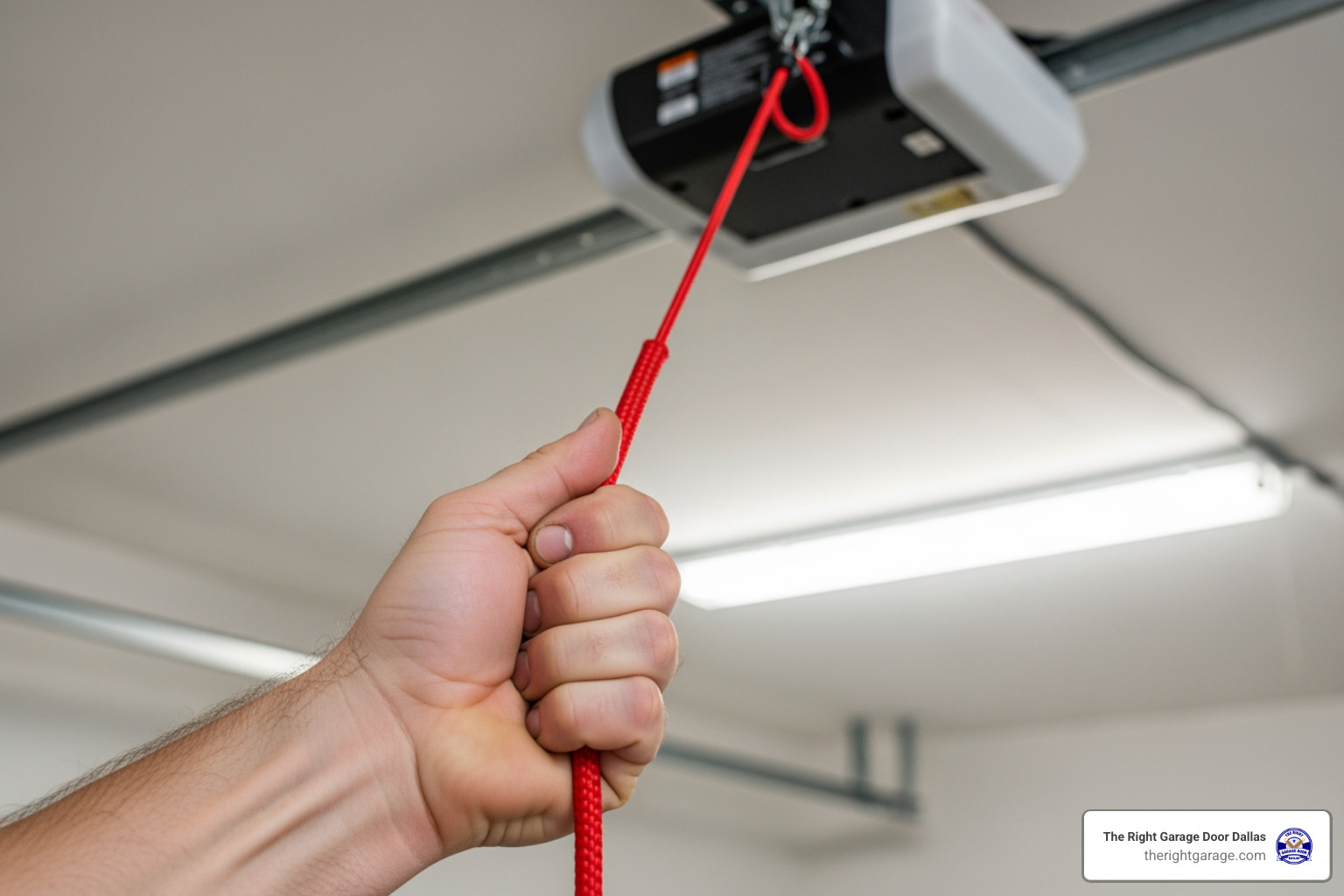
- Locate the Emergency Release Cord: Find the red cord and handle hanging from the trolley on the opener rail, usually near the center of the door.
- Access the Cord Safely: Use a sturdy stepladder if the cord is out of reach.
- Pull the Cord Firmly Downward: Grab the handle and pull straight down with a firm motion. You should hear a distinct “click” confirming the door is disconnected.
Step 2: Manually Lifting and Lowering the Door
Once disengaged, you can operate the door by hand.
- Lift from the Center: Grasp the bottom of the door at its center, using a handle if available. Lifting from the center distributes weight evenly and prevents twisting.
- Apply Even Pressure: Use both hands and lift smoothly. A balanced door should feel light. If it feels heavy, do not force it, as this indicates a broken spring.
- Secure the Door Open (If Needed): Lift the door all the way up, where it should stay. If it drifts down, the springs are weak, and you should not leave it open unattended. You may need to prop it open securely.
- Lowering the Door with Control: To close, grasp the door from the center and lower it slowly. Do not let it free-fall.
Step 3: How to Re-Engage the Opener Trolley
After power is restored, reconnect the door for automatic use.
- Ensure the Door is Fully Closed: Always start with the door down.
- Re-engage the Latch: There are a few common methods:
- Method A (Common): Pull the garage door opener emergency release cord down and then toward the door to reset the latch.
- Method B (Automatic Re-engagement): After resetting the latch, run your garage door opener with the remote. The opener carriage will travel and automatically click back into the trolley.
- Method C (Manual Sliding): On some models, you may need to manually push the door until the trolley slides back and connects with the carriage.
After re-engagement, test the opener to ensure it’s functioning correctly.
Troubleshooting: What to Do When Things Go Wrong
Sometimes things don’t go as planned. Here’s what to do if you encounter common issues. If you’re ever unsure, calling a professional is the safest bet. You can also check our FAQ for quick answers.
What If the Door is Too Heavy to Lift?
If you pull the garage door opener emergency release cord and the door is too heavy to lift, this is a critical sign of a broken spring.
- High Tension System: Garage door springs are under extreme tension to counterbalance the door’s weight. A broken spring removes this support, making the door feel incredibly heavy.
- Extreme Danger: Lifting a door with a broken spring is extremely dangerous. The remaining spring is under double stress and could also break.
- Do Not Attempt to Lift: If your door feels too heavy, do not attempt to lift it. This is not a DIY fix.
- Immediately Contact a Professional: This situation requires immediate professional assistance. Our licensed technicians at The Right Garage Door Dallas can handle broken springs safely. contact a professional today.
Common Issues with the Garage Door Opener Emergency Release Cord
If the door won’t move after pulling the garage door opener emergency release cord, the problem is likely with the door itself, not the opener.
- Misaligned Tracks: Bent or misaligned tracks can cause rollers to bind, preventing movement.
- Debris in Tracks: Dirt, grease, or small objects in the tracks can block the rollers.
- Worn or Seized Rollers: Old, cracked, or seized rollers can jam the door.
- Manual Lock is Engaged: A surprisingly common issue is an engaged manual slide lock. Check this first.
- Broken Cables: Frayed or snapped cables will make the door unbalanced and unable to move. This is a high-tension part requiring professional repair.
- Re-engagement Failure: The trolley’s internal latch may be stuck or damaged, preventing re-engagement. Our technicians in the Dallas-Fort Worth area see this often.
For any of these issues, especially those involving springs or cables, we strongly advise against DIY repairs due to the risk of serious injury. Our team offers fast, local, same-day service with licensed technicians.
Frequently Asked Questions about the Emergency Release Cord
We get a lot of questions about the garage door opener emergency release cord from homeowners in Frisco, Plano, and across North Texas. Here are some of the most common ones.
What happens if you pull the emergency release when the garage door is open?
Pulling the garage door opener emergency release cord with the door open is extremely dangerous. The opener helps hold the door up; disconnecting it can cause the door to slam shut if the springs are weak or broken. This can cause severe injury or damage, as the safety sensors will not stop a free-falling door. For this reason, you must always ensure the door is fully closed first.
How do I get my garage door to engage again?
First, ensure the door is fully closed. Pull the garage door opener emergency release cord down and toward the door to reset the latch. Then, use your remote or wall switch to run the opener. The opener carriage will travel and automatically click back into the trolley. Alternatively, you may need to manually slide the door until they connect. Test the opener to confirm it’s working. If it fails to re-engage, the trolley latch may be faulty, and you should contact a professional.
Why won’t my garage door open manually after pulling the release cord?
If the door won’t open manually after pulling the garage door opener emergency release cord, the problem is with the door’s mechanics, not the opener. Common culprits we see in the North Texas region include:
- Broken Spring: This is the most common and dangerous reason. The door will be too heavy to lift. Do not force it. Call a professional immediately.
- Misaligned Tracks or Worn Rollers: Damaged tracks or rollers can jam the door.
- Engaged Manual Lock: Check if a manual slide lock on the door is engaged.
- Broken Cables: Like broken springs, this is a high-tension issue requiring expert repair.
- Obstructions: Check the door’s path for any debris.
For issues with springs or cables, prioritize safety and contact our team at The Right Garage Door Dallas for expert assistance.
Conclusion
Understanding and knowing how to properly use your garage door opener emergency release cord is an essential skill for every homeowner. It’s your reliable backup plan for when power outages strike or your automatic opener unexpectedly malfunctions. We hope this guide has empowered you with the knowledge to handle these situations safely and effectively.
Safety is paramount. Always ensure your garage door is fully closed before pulling the cord, and never attempt to lift an excessively heavy door, as this is a strong indicator of dangerous broken springs. Knowing this process ensures you’ll always have access to your garage, even when technology lets you down.
For persistent issues, complex repairs, or if you’re ever unsure about the condition of your garage door system, professional help is always the safest option. At The Right Garage Door Dallas, we pride ourselves on offering fast, local, same-day service with licensed technicians and 24/7 emergency support across Dallas, Fort Worth, Plano, Frisco, and all of North Texas.
For expert assistance with your garage door system, explore our Services. We’re here to ensure your garage door operates safely and smoothly, providing peace of mind for you and your family.


