

Why You Shouldn’t Ignore a Loud Garage Door
A noisy garage door is more than just an annoyance—it’s often an early warning sign of mechanical problems that can lead to costly repairs or even safety hazards if left unaddressed.
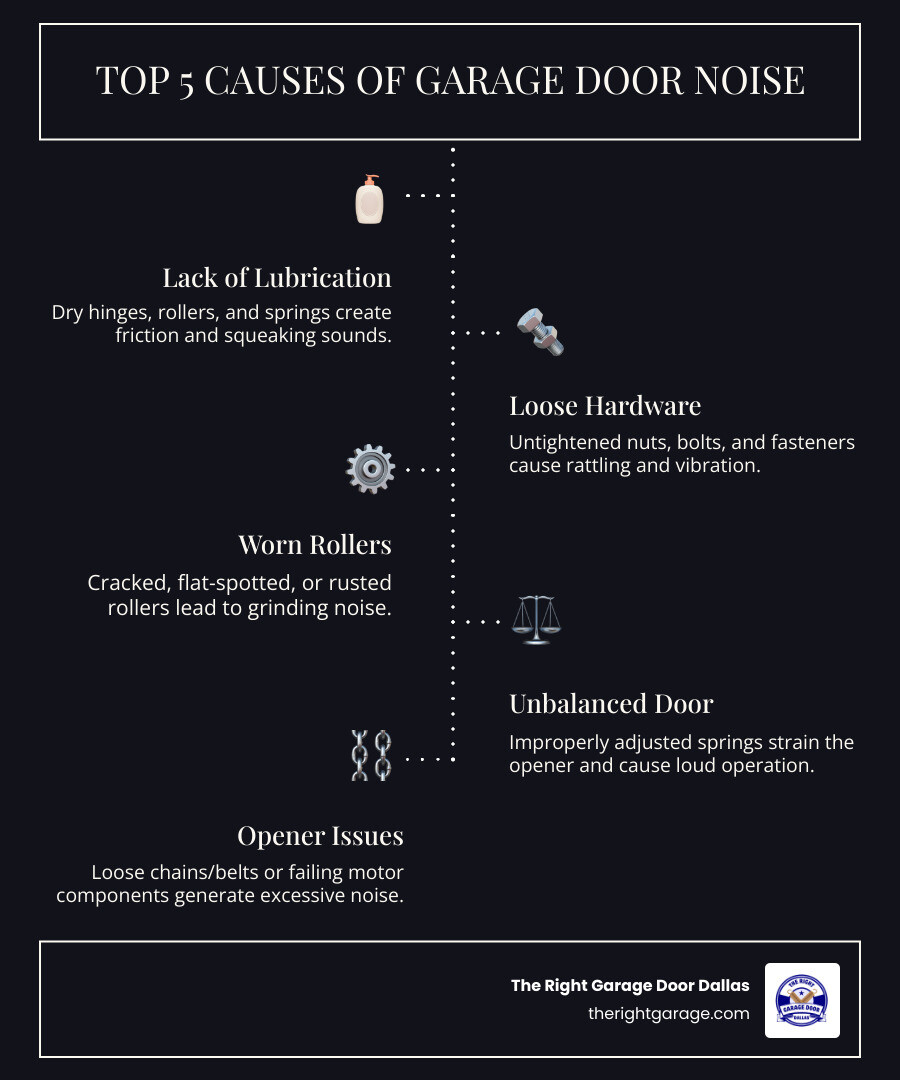
Quick Answer: Common Causes and Fixes
| Cause | Quick Fix | Difficulty |
|---|---|---|
| Lack of lubrication | Apply silicone spray to hinges, rollers, springs | Easy |
| Loose hardware | Tighten all nuts and bolts | Easy |
| Worn rollers | Replace with nylon rollers | Moderate |
| Unbalanced door | Call a professional for spring adjustment | Professional |
| Failing opener | Tighten chain/belt or upgrade to belt-drive | Moderate to Professional |
You’re coming home after a long day, hit the garage door opener, and suddenly your garage door sounds like it’s about to fall apart. That grinding, squeaking, or banging noise isn’t just disturbing your neighbors—it’s your garage door telling you something is wrong.
Here’s the reality: ignoring garage door noise rarely ends well. What starts as a minor squeak can quickly escalate into worn-out parts, a strained opener, or even a safety hazard. A garage door is one of the largest moving objects in your home, weighing between 100 to 500 pounds, and when it’s making unusual sounds, those sounds are red flags.
The good news? Most noisy garage door problems have simple solutions you can tackle yourself in an afternoon. From tightening loose bolts to lubricating dry hinges, the seven steps in this guide will help you diagnose and fix the most common noise culprits—saving you time, money, and the headache of a complete breakdown.
Consider this: garage door springs have a lifespan of 10,000 to 20,000 cycles, openers last up to 15 years, and rollers can serve you for up to 20 years. But when these components aren’t properly maintained, they wear out faster, creating noise and requiring premature replacement at an average repair cost of around $250.
Let’s decode what your garage door is trying to tell you and get it running smoothly—and quietly—again.
Decoding the Sounds: What Your Garage Door is Telling You
Your garage door speaks a unique language, and understanding its various groans, squeaks, and bangs is the first step to silencing it. Each type of noise often points to a specific issue, helping us pinpoint the problem.
- Grinding Noise: This often signals metal-on-metal contact where it shouldn’t be. It could be worn-out rollers struggling against the tracks, a misaligned track causing friction, or even a component that’s rusted solid. If you hear a grinding noise, it’s a strong indicator that parts are rubbing together, causing wear and tear.
- Squeaking or Screeching Noise: A high-pitched squeak or screech is the classic sign of friction due to a lack of lubrication. Dry rollers, hinges, or even springs can produce this irritating sound. Imagine a rusty gate; your garage door’s moving parts need similar attention to prevent this auditory assault.
- Rattling Noise: If your garage door sounds like a bag of loose parts, you’re likely dealing with loose hardware. Nuts, bolts, and screws on hinges, brackets, or even the garage door opener’s mounting can vibrate and rattle as the door moves. This might seem minor, but loose hardware can lead to bigger problems if components aren’t securely fastened.
- Popping or Banging Noise: A loud pop or bang, especially when the door is opening or closing, is a serious red flag. This can indicate a broken spring (a single loud bang often means a spring has snapped), an unbalanced door dropping too quickly, or even a door coming off its tracks. These noises demand immediate attention due to significant safety concerns.
- Clinking or Tapping Noise: Lighter metal-on-metal sounds, like clinking or tapping, might come from a loose chain on a chain-drive opener, misaligned safety sensors, or an unbalanced door causing uneven movement.
To help you diagnose the specific issue your noisy garage door might be experiencing, here’s a quick guide:
| Noise Type | Likely Causes | Recommended Actions |
|---|---|---|
| Grinding | Worn-out rollers, misaligned tracks, debris in tracks, rusted components, metal-on-metal friction. | Inspect rollers and tracks, clean tracks, lubricate, consider professional realignment. |
| Squeaking/Screeching | Lack of lubrication on hinges, rollers, springs; rust. | Lubricate all moving metal parts (except nylon rollers), check for rust. |
| Rattling | Loose nuts, bolts, screws on hinges, brackets, opener mounts. | Tighten all visible hardware, inspect thoroughly. |
| Popping/Banging | Broken spring, unbalanced door, door off track, worn cables. (High safety risk!) | Immediately call a professional. Do NOT attempt DIY spring/cable repair. |
| Clinking/Tapping | Loose chain/belt on opener, misaligned safety sensors, minor imbalance. | Inspect opener chain/belt, check sensor alignment, test door balance. |
Understanding these sounds is crucial for timely intervention. For more insights into recognizing when your garage door needs professional attention, check out our guide on the Top 5 Signs You Need Garage Door Repair in Dallas, TX.
7 DIY Steps to Silence Your Noisy Garage Door
Now that we know what those noises mean, let’s roll up our sleeves and get to work. Always prioritize safety. Before attempting any DIY fixes, ensure your garage door is closed and unplug the garage door opener. This prevents accidental operation and potential injury.
Step 1: Tighten All Nuts and Bolts
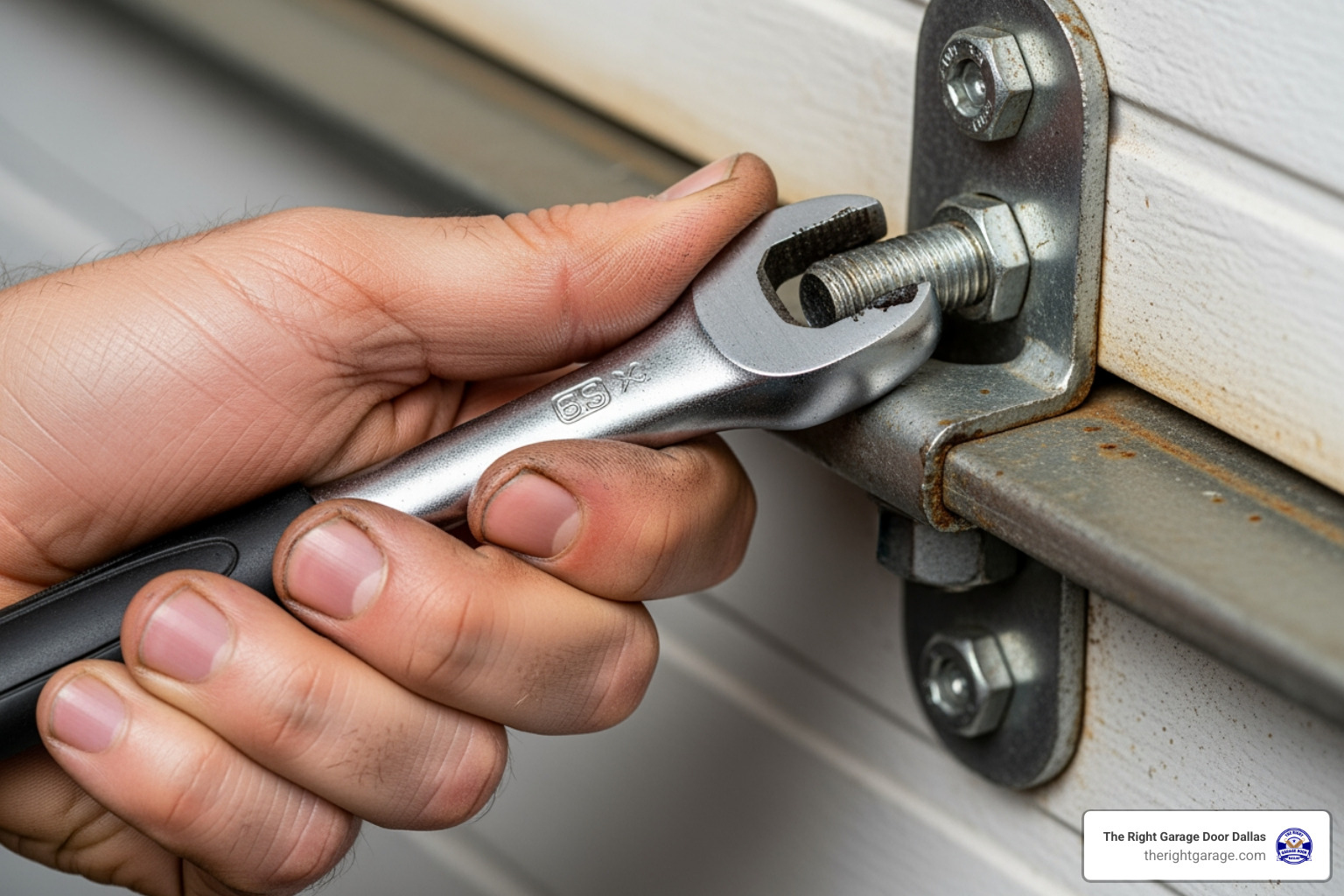
If your garage door is producing a rattling sound, loose hardware is often the culprit. Over time, the constant vibration and movement of the garage door can cause nuts, bolts, and screws to loosen. This is especially common on hinges, roller brackets, and the mounting brackets for the tracks.
What to do:
Grab a socket wrench and a screwdriver. Starting from the bottom, systematically go over every nut, bolt, and screw on the door panels, hinges, and track brackets. Don’t forget the bolts securing the opener to the ceiling. Tighten them snugly, but be careful not to overtighten, which can strip threads or warp components. We’re aiming for firm, not gorilla-strength.
Safety Precaution: Always disconnect the garage door opener from its power source before you start tightening hardware. This ensures the door won’t accidentally operate while your hands are near moving parts.
Step 2: Lubricate the Moving Parts
Squeaking and screeching are the universal cries for lubrication. Just like a squeaky wheel, a dry garage door part will protest loudly. Lubrication reduces friction, allowing components to glide smoothly instead of grinding against each other.
What to lubricate:
- Hinges: Spray a small amount of lubricant on the hinge pins where the panels connect.
- Metal Rollers: Apply lubricant to the bearings inside the rollers (not the wheel itself). If your rollers have exposed ball bearings, make sure to get the lubricant in there.
- Springs (Torsion and Extension): Lubricate the entire length of the springs. This helps reduce friction as they expand and contract.
- Opener Chain/Screw Drive: If you have a chain-drive opener, lubricate the chain. For screw-drive openers, apply a thin layer to the screw.
What NOT to lubricate:
- Nylon/Plastic Rollers: These are designed to operate without lubrication. Lubricating them can attract dirt and grime, making them stickier and noisier.
- Tracks: Never lubricate the tracks. Lubricant on the tracks can cause rollers to slip, leading to uneven movement, and it will attract dirt, creating a gummy residue that actually hinders smooth operation.
Proper lubricants:
We recommend using a silicone-based spray lubricant or white lithium grease. These lubricants are designed for garage door components, providing long-lasting, non-gumming lubrication. You can typically find them at hardware stores.
Avoid WD-40! This is a common misconception. WD-40 is primarily a solvent and a rust penetrant, not a long-term lubricant. It can actually dry out parts over time and attract dirt, making your noise problem worse.
For a visual guide on this crucial step, check out this helpful video: How To Lubricate Your Noisy Garage Door (Goodbye, SQUEAKS!).
Step 3: Inspect and Replace Worn Rollers
Grinding sounds or a general clatter can often point to worn-out rollers. Rollers are the unsung heroes that guide your garage door along its tracks. They have a lifespan of up to 20 years, but harsh conditions or lack of maintenance can shorten this.
What to look for:
- Cracks or Chips: Visually inspect each roller. Are there any cracks or chips in the roller material, especially around the edges?
- Flat Spots: Look for flat spots on the rollers. This indicates uneven wear and can cause bumpy, noisy operation.
- Rust: If you have steel rollers, check for rust on the bearings or the roller itself. Rust can seize the bearings, preventing smooth rotation.
Steel vs. Nylon Rollers:
Many older garage doors come with steel rollers, which are durable but can be quite noisy. Upgrading to nylon rollers with sealed ball bearings is one of the best ways to significantly reduce noise. Nylon rollers are quieter, require less maintenance, and are often more durable.
Replacement:
If you find any damaged rollers, they should be replaced. This is a fairly straightforward DIY task for most homeowners. You can typically find replacement rollers at hardware stores or specialty garage door suppliers in the Dallas-Fort Worth area.
For a comprehensive guide on various garage door issues, including rollers, see How to Fix a Noisy Garage Door: Comprehensive Guide for Homeowners.
Step 4: Check the Garage Door Opener
Sometimes, the source of the noise isn’t the door itself, but the opener. The garage door opener is a powerhouse, but it can also be a significant noise contributor, especially older models.
Chain-drive vs. Belt-drive:
If you have a chain-drive opener, you might be experiencing more noise than average. Chain-drive openers are known for being louder than their belt-drive counterparts, which use a rubber belt for quieter operation. If noise is a major concern, upgrading to a belt-drive opener can be a game-changer.
What to check on your opener:
- Loose Chain or Belt: If your opener uses a chain or belt, check its tension. A loose chain can sag and slap against the rail, creating a rattling or clanking noise. Most openers have an adjustment mechanism to tighten the chain or belt. Consult your opener’s manual for specific instructions. Don’t overtighten, as this can strain the motor.
- Opener Mounting Brackets: Ensure the opener is securely mounted to the ceiling joists. Loose mounting hardware can cause the entire unit to vibrate loudly. You can also install vibration isolators (rubber pads) between the opener and the mounting brackets to absorb vibrations and prevent them from transferring to the ceiling structure.
- Motor Noise: If the motor itself is making excessive grinding, whining, or straining noises, it might be nearing the end of its lifespan or experiencing internal issues. In such cases, professional diagnosis is recommended.
Step 5: Test the Garage Door Balance
An unbalanced garage door is a major source of noise and a significant safety risk. When the door isn’t properly balanced, the springs aren’t doing their job correctly, forcing the garage door opener to work harder. This extra strain can damage the opener and other components, leading to more noise and premature wear.
How to test the balance:
- Close the door completely.
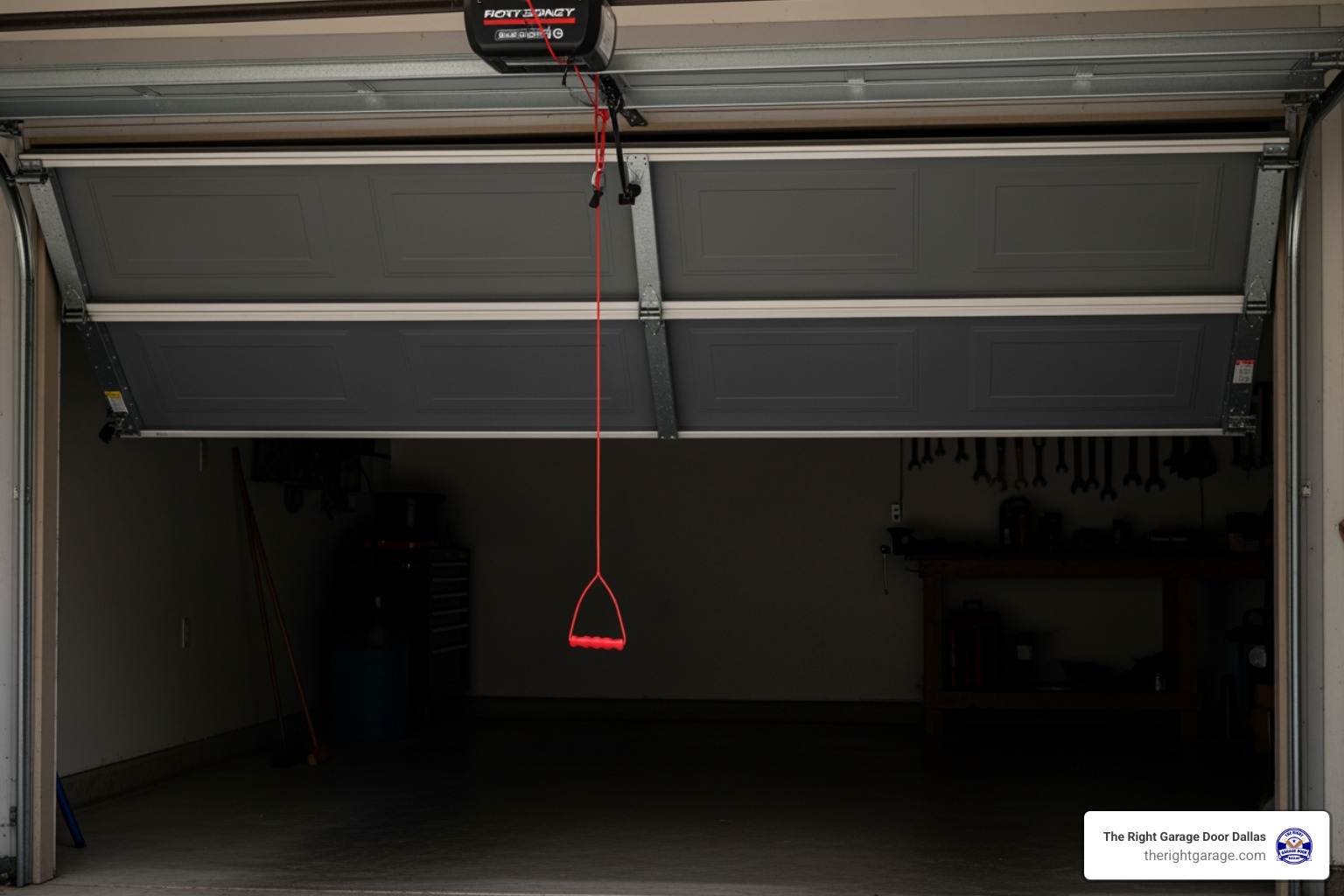
- Disconnect the opener: Pull the emergency release cord (usually a red handle hanging from the opener’s trolley). This disengages the door from the opener, allowing you to move it manually.
- Manually lift the door: Carefully lift the door by hand and stop it about halfway up.
- Observe: A properly balanced door should stay in place when you let go, without falling or springing upward. If it falls quickly, the springs are too loose. If it shoots upward, they’re too tight.
What to do if it’s unbalanced:
If your door doesn’t stay put, it’s unbalanced. Do NOT attempt to adjust the springs yourself. Garage door springs are under extreme tension and can cause severe injury if mishandled. This is a job for a qualified professional. They have the specialized tools and training to safely adjust or replace springs.
You can book an inspection with our team to check your door balance and address any spring issues.
Step 6: Inspect the Tracks for Misalignment
Your garage door tracks are like railway lines for your rollers. If they’re bent, damaged, or misaligned, the rollers will struggle to move smoothly, creating grinding, scraping, or clunking noises.
What to look for:
- Bent or Damaged Tracks: Visually inspect the entire length of both vertical and horizontal tracks. Look for any bends, dents, or crimps.
- Debris: Check for any debris, dirt, or hardened grease inside the tracks that might be obstructing the rollers. Clean them out with a brush and a damp cloth.
- Gaps: Look for uneven gaps between the rollers and the track walls. The rollers should move snugly within the tracks without excessive play or binding.
Gentle Realignment:
For minor misalignments, you might be able to gently tap the track back into position with a rubber mallet. However, for significant bends or damage, or if the tracks are severely out of plumb, it’s best to call a professional. Improper track alignment can cause the door to come off its tracks, which is a dangerous situation.
Step 7: Consider Insulation and Weather Stripping
While not a direct mechanical fix, adding insulation and checking your weather stripping can significantly reduce overall garage noise, both from the door itself and external sources.
Insulation:
An uninsulated garage door can vibrate more, amplifying sounds. Adding insulation panels can help dampen these vibrations and absorb sound, making the door operate more quietly. Furthermore, insulating your garage door and the garage itself can reduce noise transfer to adjacent living spaces, especially if you have a room above the garage. DIY insulation kits are available and can be a cost-effective way to improve sound deadening and energy efficiency. That insulating a heavier door might require spring or opener adjustments, which we can help with. The average cost to insulate a garage can be around $4,700, but door-specific kits are much less.
Weather Stripping:
Worn or damaged weather stripping around the perimeter of the garage door can create gaps that allow air—and sound—to pass through. Replacing the bottom seal and the perimeter weather stripping can create a tighter seal, reducing drafts and external noise. This also prevents rattling of the door against the frame when closed.
When DIY Isn’t Enough: Knowing When to Call a Professional
We understand the satisfaction of a good DIY fix, but there are certain garage door issues that are simply too dangerous or complex for a homeowner to tackle. When it comes to your garage door, safety always comes first.
Safety First:
Garage door springs and cables are under immense tension. A broken or improperly handled spring can release with explosive force, causing severe injury or even death. Similarly, if a cable snaps or comes off its drum, the door can crash down unexpectedly. For these reasons, we strongly advise against attempting to repair or adjust springs and cables yourself.
Signs You Need a Pro:
- Loud Bang: A sudden, very loud bang usually indicates a broken torsion spring. Do not operate the door.
- Door Off Track: If your door has come off its tracks, it’s a complex and potentially dangerous repair.
- Unbalanced Door: As discussed in Step 5, if your door doesn’t stay put when manually lifted halfway, it needs professional spring adjustment.
- Persistent Noise: If you’ve tried all the DIY steps and your noisy garage door persists, it’s time for expert diagnosis. There might be underlying issues that aren’t immediately obvious.
- Frayed Cables: Frayed or damaged cables are a serious safety hazard and require immediate professional attention.
- Opener Malfunctions: If your opener is grinding, struggling, or failing to operate correctly after basic checks, it might need specialized repair or replacement.
While a garage door repair averages about $250, and spring replacement averages about $250, attempting these dangerous repairs yourself could lead to far greater costs (and injuries!) in the long run. When in doubt, call us for reliable, same-day service in the Dallas-Fort Worth area. You can even Get A Free Quote from us.
Professional Solutions for a Persistently Noisy Garage Door
When your DIY efforts fall short, our licensed technicians at The Right Garage Door Dallas are equipped to handle any noisy garage door issue. Our professional solutions include:
- Annual Tune-Ups: Regular professional maintenance can prevent most noise issues before they start. We inspect all components, lubricate, tighten, and adjust your system for optimal performance.
- Professional Diagnosis: We can quickly pinpoint the exact cause of complex noises, whether it’s a worn gear in the opener, a subtle track misalignment, or a failing bearing.
- Spring Replacement and Adjustment: Our experts can safely replace broken springs or adjust their tension to perfectly balance your door.
- Cable Repair: We handle frayed or snapped cables, ensuring your door operates safely.
- Opener Repair and Replacement: From fixing internal opener issues to recommending and installing quieter, more efficient models, we ensure your opener is functioning optimally.
Upgrades and Maintenance for Long-Term Quiet
Beyond immediate fixes, proactive maintenance and strategic upgrades can keep your garage door running quietly for years to come.
The Benefits of Regular Maintenance
Think of your garage door like your car—it needs regular tune-ups to perform its best. Proper maintenance not only extends the lifespan of your garage door and its components (up to 30 years with care, compared to a typical 15 years for new doors), but it’s also the best defense against a noisy garage door.
Preventative care includes:
- Routine Lubrication: As we discussed, regular lubrication every few months keeps friction at bay.
- Hardware Checks: Periodically tightening bolts prevents rattling.
- Inspections: Catching worn rollers, frayed cables, or minor track issues early can prevent them from escalating into major noise problems or costly repairs.
- Annual Professional Inspections: We recommend an annual professional inspection, especially before winter in the Dallas-Fort Worth area. Cold temperatures can cause metal parts to contract, increasing friction and noise. A pro can spot subtle issues you might miss and ensure everything is perfectly aligned and lubricated.
For more tips on keeping your garage door in top shape, explore our Blog.
Upgrading Components for a Quieter Garage Door
If you’re tired of your noisy garage door and want a long-term solution, consider upgrading some key components.
- Belt-Drive Openers: If you currently have a chain-drive opener, upgrading to a belt-drive model is one of the most effective ways to reduce noise. Belt-drive openers use a reinforced rubber belt instead of a metal chain, resulting in significantly quieter and smoother operation. This is especially beneficial if you have living spaces above or adjacent to your garage.
- Nylon Rollers: As mentioned earlier, replacing old steel rollers with high-quality nylon rollers with sealed ball bearings can make a dramatic difference. They glide more smoothly and are inherently quieter.
- Insulated Garage Doors: Beyond sound dampening, an insulated garage door offers energy efficiency benefits, helping to regulate temperatures inside your garage. The added mass of insulation can also reduce vibrations and noise. Modern insulated doors also often come with better seals, further reducing noise transmission.
- Smart Home Features: Many modern openers, including quiet belt-drive models, come with smart home integration, allowing you to control and monitor your garage door from your phone. In addition to noise, it’s a beneficial upgrade to consider when replacing an older opener.
Frequently Asked Questions about a Noisy Garage Door
We hear a lot of questions about garage door noise from our customers in Dallas, Fort Worth, and the surrounding areas. Here are some of the most common ones:
Why is my noisy garage door louder in the winter?
This is a common observation in regions like North Texas, where we experience seasonal temperature fluctuations. Metal parts in your garage door system, such as tracks, springs, and rollers, contract slightly in cold weather. This contraction can increase friction between moving components, leading to more squeaking, grinding, and overall louder operation. Additionally, cold grease or lubricant can thicken, becoming less effective. This highlights the importance of regular lubrication, especially a fresh application before the colder months, to minimize winter noise.
What is the best lubricant for a garage door?
The best lubricants for your garage door are silicone-based spray lubricant or white lithium grease.
- Silicone-based spray is excellent for general lubrication of hinges, metal rollers (on their bearings), and springs. It’s clean, doesn’t attract much dirt, and works well in various temperatures.
- White lithium grease is a heavier lubricant, ideal for metal-on-metal contact points, such as the chain of a chain-drive opener or the opener’s screw drive.
Crucially, avoid solvents like WD-40 as they can strip away existing lubrication and attract dirt, worsening the problem. Also, remember to never lubricate the tracks themselves; lubricant on tracks will only attract grime and hinder roller movement.
Can a noisy garage door damage my opener?
Yes, absolutely! A noisy garage door is often a symptom of underlying issues that can put significant strain on your garage door opener. For example:
- Lack of Lubrication: Increased friction from dry parts forces the opener to work harder.
- Unbalanced Door: If the springs aren’t properly balancing the door’s weight, the opener has to exert excessive force to lift or lower it. This is like asking your car engine to tow a much heavier load than it’s designed for, every single day.
- Worn Components: Worn rollers, hinges, or misaligned tracks create resistance that the opener must overcome.
This increased strain shortens the lifespan of your opener (which is typically up to 15 years) and can lead to premature failure, resulting in a costly replacement. Addressing the source of the noise promptly protects your opener and extends its life.
For more answers to common questions about garage door care, visit our comprehensive FAQ page.
Conclusion: Enjoy the Sound of Silence
A noisy garage door is more than just an irritating sound; it’s a vital communication from one of your home’s most hardworking components. We’ve learned that noise is almost always a warning sign, indicating anything from a simple lack of lubrication to serious safety hazards like broken springs or an unbalanced door. By following our 7 easy DIY steps, you can tackle many common noise culprits yourself, saving money and improving your door’s longevity.
However, we can’t stress enough: safety always comes first. For high-tension components like springs and cables, or if your DIY efforts don’t resolve the issue, it’s crucial to call in the professionals.
At The Right Garage Door Dallas, we pride ourselves on expert diagnosis and fast, same-day repairs across the Dallas-Fort Worth area. Our licensed technicians are ready to restore peace and quiet to your home, ensuring your garage door operates smoothly, safely, and quietly for years to come.
For professional help with your garage door, explore our expert Services.


