

Why Your Garage Door Won’t Open: Understanding Torsion Spring Replacement Costs
The cost to replace a garage door torsion spring typically ranges between $250 and $450 for professional installation, including parts and labor. This is the single most common garage door repair you’ll encounter, and understanding what you should pay helps you avoid overpaying during an emergency.
Quick Cost Breakdown:
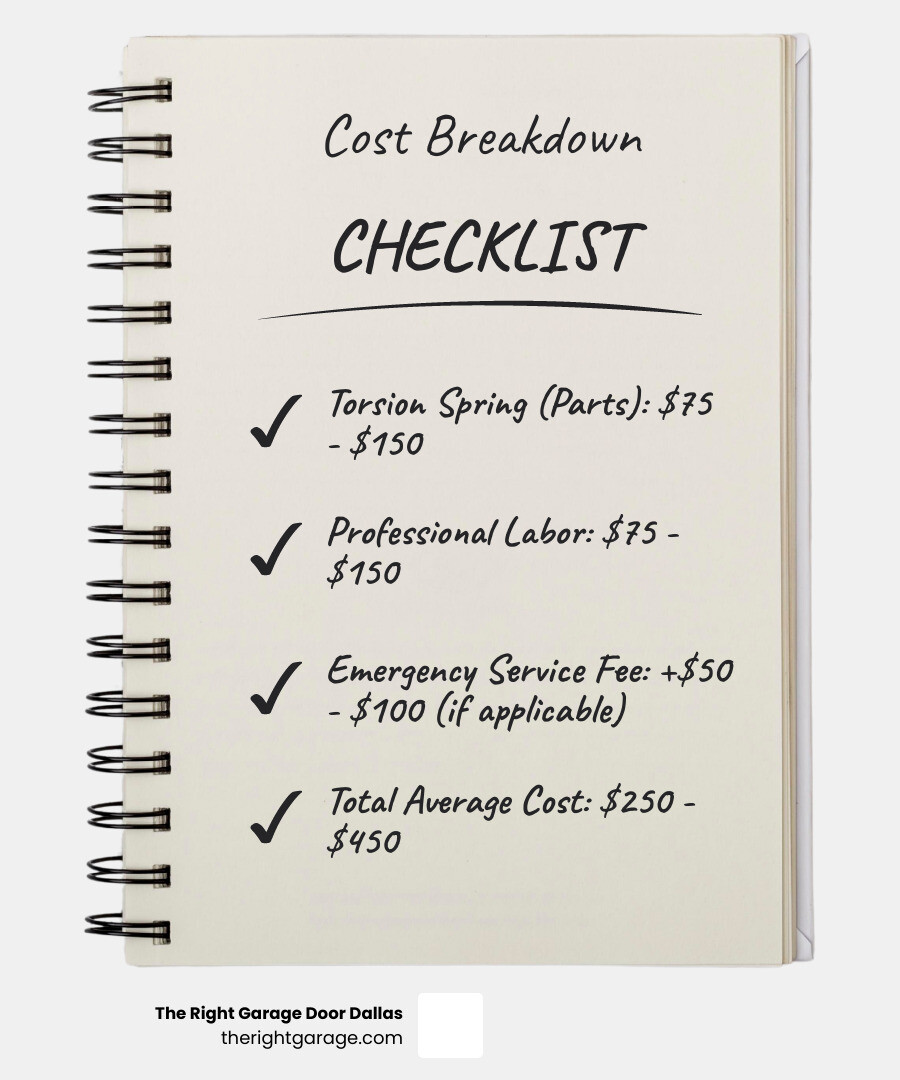
| Cost Component | Price Range |
|---|---|
| Torsion Spring (Parts) | $75 – $150 per spring |
| Professional Labor | $75 – $150 |
| Emergency Service Fee | +$50 – $100 (if applicable) |
| Total Average Cost | $250 – $450 |
You probably heard a loud bang from your garage. Now your door won’t open, and your car is stuck inside. That sound was your torsion spring breaking—a heavy metal coil that sits above your garage door and does the heavy lifting every time you open it.
Here’s the frustrating part: when your spring breaks is rarely convenient. It happens when you’re rushing to work, during extreme weather, or right before an important trip. The urgency makes it tempting to call the first company you find and agree to whatever price they quote.
But garage door spring replacement costs vary widely in the Dallas-Fort Worth area. Some companies charge fair, transparent prices. Others take advantage of emergency situations with inflated quotes or unnecessary add-ons. According to industry data, most residential garage doors use torsion springs designed for 10,000 to 20,000 cycles—meaning if you open your door 3-4 times daily, you’re looking at a 7-15 year lifespan before replacement.
This guide breaks down exactly what a reasonable torsion spring replacement should cost, what factors influence the price, and why attempting this repair yourself is genuinely dangerous (despite what YouTube videos might suggest).
Breaking Down the Numbers: What’s in a Torsion Spring Replacement Quote?
When you receive a quote for a garage door torsion spring replacement in the Dallas-Fort Worth area, it’s more than just the price of the spring itself. It encompasses a few key components that contribute to the overall cost. Understanding these elements can help you evaluate if the quote you’re getting is fair and transparent.

Generally, the average cost to replace a garage door torsion spring, including professional installation, falls between $250 and $450. This range typically covers the necessary parts and the labor involved in getting your garage door back in working order. However, various factors can push this figure slightly higher or lower, which we’ll explore in detail. Our aim is always to provide upfront pricing, so you know exactly what you’re paying for before any work begins.
Torsion Spring Parts Cost
The torsion spring itself is the most significant material cost. Depending on the door size and spring type, replacing a torsion spring typically costs between $75 and $150 per spring.
Several factors influence this price:
- Spring Quality and Cycle Life: Not all springs are created equal. Standard torsion springs generally offer a service life of 7,000 to 10,000 open/close cycles, which usually translates to 6-10 years for an average household. However, you can opt for high-cycle or “double-life” springs, which are designed to last much longer—up to 25,000 cycles or more. These premium springs, while adding about $65 to the price compared to standard options, can significantly extend the time before your next replacement, making them a worthwhile investment in the long run. Investing in higher-quality springs often pays off through extended lifespans and improved performance, saving you from frequent repairs.
- Single vs. Double Spring Systems: Most residential garage doors, especially those in the Dallas-Fort Worth area, use a two-spring torsion system. Even if only one spring breaks, professionals recommend replacing both simultaneously to ensure balanced operation. We’ll dive deeper into this reasoning shortly, but the implication for parts cost is that you’ll typically be paying for two springs, not just one. Some builders, unfortunately, cut costs by installing a single, extra-long spring system on two-car garages, which significantly shortens the lifespan of the spring and often leads to premature failure.
- Material Costs: The cost of the spring is directly related to its material, wire size, and length, which are determined by the weight and dimensions of your garage door. Heavier or larger doors require more robust (and thus more expensive) springs. Non-discounted retail pricing for a 10,000 cycle rated torsion spring set for a 150 lb door might range from $96 to $112 per spring.
Labor and Service Fees
Beyond the spring itself, labor is a major component of the cost to replace a garage door torsion spring. Professional labor fees for spring installation typically range from $75 to $150, although this can vary.
Here’s what influences labor costs:
- Hourly Rates and Job Complexity: Garage door technicians in the Dallas-Fort Worth area generally charge an hourly rate, often between $75 and $150. Replacing torsion springs is a complex and dangerous job, requiring specialized training and expertise. It usually takes a professional technician about 30 minutes to an hour to replace both springs on a door. The complexity of torsion springs, compared to extension springs, also contributes to their higher material and installation costs.
- Emergency Service Fees: When your garage door spring breaks, it rarely happens at a convenient time. If you need immediate assistance outside of regular business hours—such as evenings, weekends, or holidays—you might incur emergency service fees. These can add an extra $50 to $100 to the bill, or even increase the cost by 50-100% compared to a scheduled appointment. We understand the urgency and offer 24/7 emergency support, but it’s important to be aware of these potential additional charges for immediate, off-hour service.
- Travel Fees: While we pride ourselves on being local to the Dallas-Fort Worth area, some service calls to more distant parts of our extended service regions might include a travel fee. These fees typically cover the technician’s time and fuel, especially for remote locations. However, for most of our core service areas, these are usually minimal or included in the overall service call.
Key Factors That Influence the Cost to Replace a Garage Door Torsion Spring
Understanding the average costs is a great start, but several specific factors can significantly influence the final quote for your garage door torsion spring replacement. These variables help explain why one homeowner might pay slightly more or less than another, even for what seems like a similar repair.
When getting an estimate, it’s crucial to provide accurate details about your garage door and the specific issue. This helps us give you the most precise and upfront pricing.
Torsion Springs vs. Extension Springs
The type of spring system your garage door uses is a fundamental factor in replacement costs and overall performance.
| Feature | Torsion Springs | Extension Springs |
|---|---|---|
| Cost | Higher ($192-$371 installed) | Lower ($98-$200 installed) |
| Lifespan | Longer (8-15 years / 10,000-30,000 cycles) | Shorter (7-12 years / 5,000-10,000 cycles) |
| Safety | Safer (contained on a shaft, less likely to fly) | Less safe (can fly if broken, needs safety cables) |
| Performance | Smoother, quieter, more balanced operation | Jerkier operation, more wear on door components |
- Torsion Spring Complexity: Torsion springs are generally considered the superior option. They mount horizontally on a metal shaft directly above the garage door opening. When the door closes, these springs twist, storing mechanical energy that assists in lifting the heavy door. Their complex design and the high-grade materials required for their construction often make them more expensive upfront, with parts alone ranging from $75 to $150. However, this investment typically results in a longer lifespan and a smoother, quieter, and more balanced operation.
- Extension Spring Safety: Extension springs, conversely, run parallel to the horizontal tracks on either side of the door. They work by stretching to store energy. While less expensive to replace (typically $98-$200 installed), they come with significant safety concerns. If an extension spring breaks, it can snap and fly across the garage, posing a serious hazard to people and property. For this reason, safety cables are strongly recommended for extension springs to contain them if they fail. Most garage door professionals prefer torsion systems due to their inherent safety and durability.
- Conversion Costs: If your current system uses extension springs, converting to a torsion spring system is a common upgrade for improved safety and longevity. This conversion, however, involves more than just swapping springs. It requires installing a torsion shaft, new cable drums, and potentially new cables and brackets. The cost to replace a garage door torsion spring by converting from an extension system can range from $400 to $800, including both parts and labor, reflecting the additional hardware and complexity.
Garage Door Size and Weight
The dimensions and weight of your garage door directly dictate the size and strength of the torsion springs required, which in turn affects the cost to replace a garage door torsion spring.
- Single vs. Double Garage Doors: A standard single garage door will typically require a different spring configuration than a double garage door. Double garage doors are wider and heavier, necessitating larger, stronger, or sometimes more springs to manage the increased load. The price per spring can increase by $15 to $30 for double garage doors, with total replacement costs for double doors ranging from $300 to $600.
- Custom or Heavy Doors: If you have an oversized, custom, or particularly heavy garage door, such as those made from solid wood, the springs will need to be custom-matched to handle the weight. These specialized springs often come at a higher price point.
- Wood vs. Steel Doors; Insulated Doors: The material and construction of your door play a big role.
- Wood doors are generally heavier than steel and require more robust springs.
- Insulated doors, while great for energy efficiency, also add significant weight, pushing up the spring requirements and associated costs. Insulated garage doors can incur spring replacement costs between $250 and $400.
- Spring Wire Size and Length: The actual specifications of the spring—its wire diameter, inner diameter, and length—are precisely calculated to counterbalance the exact weight of your door. Larger wire sizes and longer springs (needed for heavier doors) will naturally cost more. This is why spring type and quality can impact the overall cost by 30-40%.
The Cost to Replace a Garage Door Torsion Spring: One vs. Two
This is a common question, and our answer is almost always the same: if one torsion spring breaks, we strongly recommend replacing both.
- Replacing Springs in Pairs: Most residential garage doors in the Dallas-Fort Worth area operate with a two-spring torsion system. When one spring breaks, it’s a clear indication that both springs have endured the same amount of wear and tear over their lifespan. The unbroken spring is likely to fail soon after, often within a few weeks or months.
- Balanced Operation: Replacing both springs ensures that your garage door operates with balanced tension. When one spring is new and strong while the other is old and weak (or entirely broken), the door’s lifting mechanism becomes unbalanced. This imbalance puts undue stress on the new spring, the garage door opener, cables, drums, and other hardware, potentially leading to premature failure of these components and more expensive repairs down the line. It also results in jerky, uneven operation, which can cause further damage to the door itself.
- Labor Cost Savings: While the initial parts cost is higher for two springs, replacing both at the same time is almost always cheaper in terms of labor. A technician is already on-site, has set up their tools, and is performing the same work on both sides. Doing two springs in one visit avoids a second service call and labor charge when the other spring inevitably breaks. This means you save on future labor costs and the inconvenience of another broken door. The International Door Association (IDA) in 2023 indicated that replacing both springs can extend the lifespan of the garage door mechanism by up to 40%.
- Preventing Future Failures and Uneven Wear: By replacing both springs, you reset the clock on their lifespan, ensuring they wear out evenly together. This proactive approach prevents the stress and damage caused by uneven tension and significantly reduces the likelihood of another unexpected breakdown. It’s a small additional investment now that provides substantial peace of mind and long-term savings.
The DIY Dilemma: Is Replacing a Torsion Spring Yourself a Good Idea?
We get it. When you’re facing an unexpected repair bill, the thought of saving money by doing it yourself can be tempting. You might have watched a few YouTube videos and thought, “How hard can it be?” When it comes to replacing a garage door torsion spring, we have to be absolutely clear: this is not a DIY job. It is one of the most dangerous home repairs you can undertake, and we strongly advise against it.
- Extreme Danger and High Spring Tension: Torsion springs are under immense tension—often exceeding 200 pounds of force. This incredible energy is what allows them to lift hundreds of pounds of garage door with relative ease. When these springs are being wound or unwound, that tension is concentrated and can be released with explosive force if not handled correctly.
- Risk of Injury or Death: The consequences of a mishandled torsion spring are severe. We’ve heard stories and seen the results of accidents: springs violently snapping, winding bars flying off, and individuals being thrown from ladders. The tension in a spring is powerful enough to break bones, cause severe lacerations, shatter windows, damage your car, and even be fatal. Many accidents, injuries, and deaths occur each year to amateur home-repairers who lack the proper tools or knowledge. As the saying goes, “Trust us: This is the best way to wind up in the hospital.”
- Specialized Tools: Replacing torsion springs requires specific, professional-grade tools, most notably hardened-steel winding bars. These aren’t your average screwdrivers or crowbars. Never use makeshift tools like screwdrivers, pin punches, or pliers handles; they can slip, break, and cause catastrophic injury. You can buy a set of professional winding bars for around $25, but having the right tools is only half the battle.
- Professional Expertise: Beyond the tools, the job demands precise knowledge of how springs counterbalance door weight, how to safely wind and unwind them, and how to properly align and tension the entire system. Without this expertise, you risk not only injury but also improper installation, which can lead to rapid wear on your new springs, damage to your garage door opener, or even cause the door to fall unexpectedly.
- Peace of Mind: The relatively small savings you might achieve by attempting a DIY replacement simply aren’t worth the significant risk to your safety, your property, and your peace of mind. Our licensed technicians in the Dallas-Fort Worth area are trained, experienced, and equipped with the right tools to perform this dangerous job safely and efficiently. We offer same-day service and 24/7 emergency support precisely so you don’t have to put yourself in harm’s way. Let us take the danger and guesswork out of it, ensuring your new springs are installed flawlessly and your garage door operates safely.
Frequently Asked Questions about Torsion Spring Replacement
We understand you likely have many questions when facing a broken garage door spring. Here are some of the most common inquiries we receive, along with expert answers to help you make informed decisions.
What are the signs that a garage door torsion spring is about to break?
Catching signs of a failing spring early can prevent your car from being trapped inside and allow you to schedule a repair before an emergency.
- Loud Popping Noise: This is the most definitive sign. If you hear a sudden, extremely loud “bang” that sounds like a gunshot coming from your garage, it’s almost certainly a broken torsion spring. This noise occurs when the spring snaps under pressure.
- Visible Gap in the Spring: After hearing that loud noise, inspect the spring above your door. A broken torsion spring will have a noticeable gap or separation in the coils, usually near the center.
- Crooked or Uneven Door: If one of your two torsion springs breaks, the door will lose balance on one side. This can cause it to appear crooked when opening or closing, or it might get stuck partially open or closed.
- Door Opens Partially or Not at All: With a broken spring, the garage door opener struggles to lift the immense weight of the door on its own. The door might open only a few inches, halfway, or not move at all, even if you hear the opener motor running.
- Garage Door Feels Heavy: If you attempt to lift the door manually (after disconnecting the opener, which you should always do before any manual operation), it will feel incredibly heavy—much heavier than usual. The springs are designed to make the door feel almost weightless.
- Opener Straining or Making Unusual Noises: Your garage door opener is not designed to lift the full weight of the door. If the springs aren’t assisting, the opener will strain, make grinding or struggling noises, and could eventually burn out or break itself.
If you observe any of these signs in your Dallas-Fort Worth home, it’s crucial to stop using your garage door immediately and call a professional for inspection and repair.
What is the typical lifespan of a garage door torsion spring?
The lifespan of a garage door torsion spring is measured in “cycles,” where one cycle equals one opening and closing of the garage door.
- Spring Life Cycles: Most standard residential torsion springs are rated for 10,000 to 20,000 cycles.
- Average Lifespan in Years:
- For a typical household that uses their garage door 3-4 times a day, a 10,000-cycle spring will last approximately 7-10 years.
- A 20,000-cycle spring can last 15 years or more.
- High-cycle springs (25,000+ cycles) offer even greater longevity, making them a wise investment for high-usage households.
- Usage Frequency: Naturally, the more often you open and close your garage door, the faster the springs will accumulate cycles and reach the end of their lifespan. A family that uses their garage door 6-8 times a day, for instance, will wear out springs much faster than someone who uses it once daily. Most two-car garages in the Dallas-Fort Worth area are opened and closed 6 to 8 times each day for a staggering 3,000 times a year.
- Maintenance Impact: Regular maintenance, such as lubricating the springs with a silicone-based spray every three months and ensuring the door is properly balanced, can help prolong their life. Rust buildup, for example, can significantly shorten a spring’s lifespan by corroding the metal and increasing friction between coils. Poor or irregular maintenance is a common factor in premature spring failure.
What kind of warranty comes with new torsion springs?
When you invest in a new garage door torsion spring replacement, understanding the warranty is crucial for your peace of mind.
- Manufacturer Warranty: New torsion springs typically come with a manufacturer’s warranty that covers defects in the spring itself. This can range anywhere from 1 year for basic springs to 7 years or more for higher-quality, high-cycle springs. Always inquire about the specific warranty period for the springs being installed. Manufacturer warranties usually cover replacement of the spring itself but often do not cover the labor costs associated with re-installing it.
- Labor Warranty: Beyond the spring itself, a reputable garage door company like ours will also offer a labor warranty on the installation. This warranty ensures that if any issues arise directly from the installation process within a specified period (e.g., 30-90 days or even longer), we will address them without additional labor charges.
- What’s Covered: Generally, warranties cover manufacturing defects or premature failure under normal operating conditions. They typically do not cover damage caused by misuse, accidents, lack of maintenance, or improper use of the garage door. We always provide clear information on what your warranty covers, both for parts and labor, so there are no surprises down the road.
Get a Fair and Fast Torsion Spring Replacement in Dallas
Dealing with a broken garage door torsion spring is never fun. It’s an unexpected expense and a major inconvenience. We understand the urgency and the need for a reliable, honest service provider in the Dallas-Fort Worth area.
As we’ve discussed, the cost to replace a garage door torsion spring generally ranges from $250 to $450, influenced by factors like spring quality, door size, and whether you need emergency service. While DIY might seem like a way to save money, the extreme dangers associated with highly tensioned springs make professional installation a necessity for your safety and the longevity of your garage door system.
At The Right Garage Door Dallas, we specialize in expert residential and commercial garage door repair, installation, and maintenance. We pride ourselves on fast, local, same-day service with licensed technicians who are available 24/7 for emergency support. Our commitment to upfront pricing means you’ll always know the cost before we start any work, with no hidden fees or surprises.
Don’t let a broken spring ruin your day or compromise your safety. Trust our experienced team to get your garage door operating smoothly and safely again.


