

Why Replacing Both Garage Door Springs Matters for Your Safety and Wallet
Replace both garage door springs even when only one breaks—it’s the smartest move for your safety, your door’s balance, and your budget. Here’s what you need to know right away:
Quick Answer: Should You Replace Both Springs?
- Yes, always replace both springs together when one breaks
- The second spring has endured the same wear and will likely fail soon
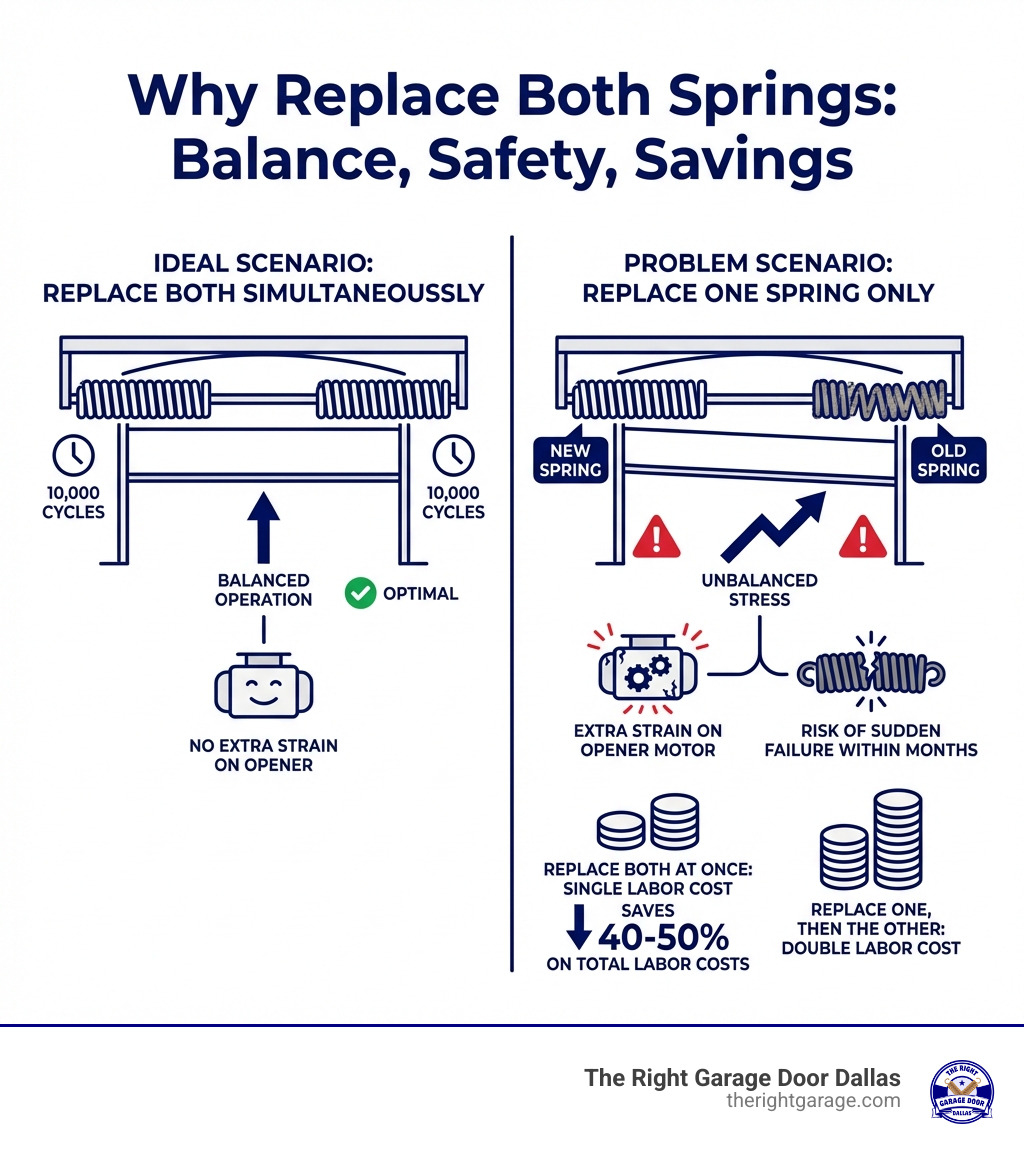
- Replacing both at once saves you from paying double labor costs
- A balanced door protects your opener from premature burnout
- Unbalanced doors can drop suddenly, risking injury and property damage
Did you hear a loud pop when opening or closing your garage door? That sound means one of your springs just snapped. According to the International Door Association, approximately 70% of garage door issues stem from spring-related problems.
Here’s the reality: your garage door springs are under extreme tension, balancing hundreds of pounds of door weight. They’re rated for a specific number of cycles—typically 10,000 to 20,000 cycles, which translates to about 7 to 12 years depending on usage. When one spring breaks, its partner has gone through the exact same stress and is living on borrowed time.
Think of it like replacing a pair of boots. If one sole wears through after years of use, you wouldn’t just replace that single boot. The other one is just as worn and will fail shortly after.
Operating on one spring is dangerous. Your door becomes unbalanced, making it feel 50% heavier. The remaining spring is overstressed, your opener motor strains to compensate, and the door can drop like a guillotine without warning.
Whether you tackle this as a DIY project or call a professional, understanding why both springs need replacement is crucial. This guide will walk you through everything you need to know—from identifying your spring type to deciding between professional service and doing it yourself.
Replace both garage door springs terms to know:
Why You Should Always Replace Both Garage Door Springs
When we visit homes in Dallas or Fort Worth, we often see homeowners tempted to replace only the single broken spring to save a few dollars. However, this is a classic “penny wise, pound foolish” situation.
Symmetrical Wear and Balanced Performance
Garage door springs are manufactured in pairs and installed at the same time. This means they share the same “mileage” or cycle rating. If your left spring has snapped after 10,000 cycles, the right spring is likely at 9,999 cycles and is ready to go at any moment. By choosing to replace both garage door springs, you ensure that both components have the same tension and life expectancy, leading to a perfectly balanced door.
An unbalanced door is a silent killer for your garage door opener. When the springs aren’t doing the heavy lifting, the motor has to work twice as hard. This leads to premature burnout, which can cost significantly more than a second spring. You can check out the Top 5 Signs You Need Garage Door Repair in Dallas TX to see if your door is already showing signs of struggle.
Labor Cost Efficiency
From a financial perspective, the labor is the most expensive part of the repair. A technician is already at your home, the door is secured, and the tools are out. Replacing the second spring usually only adds a small amount to the total time, but it saves you from paying a second service call fee and labor charge three months later when the other spring inevitably breaks.
| Feature | Single Spring Replacement | Dual Spring Replacement |
|---|---|---|
| Initial Cost | Lower | Moderate |
| Long-term Cost | Higher (two service calls) | Lower (one service call) |
| Door Balance | Poor (uneven tension) | Perfect |
| Opener Strain | High | Low |
| Safety Risk | High (second spring failure) | Low |
Understanding Torsion vs. Extension Springs
Before you attempt to replace both garage door springs, you must identify which system you have. In the North Texas area, we primarily see two types: torsion and extension.
Torsion Springs
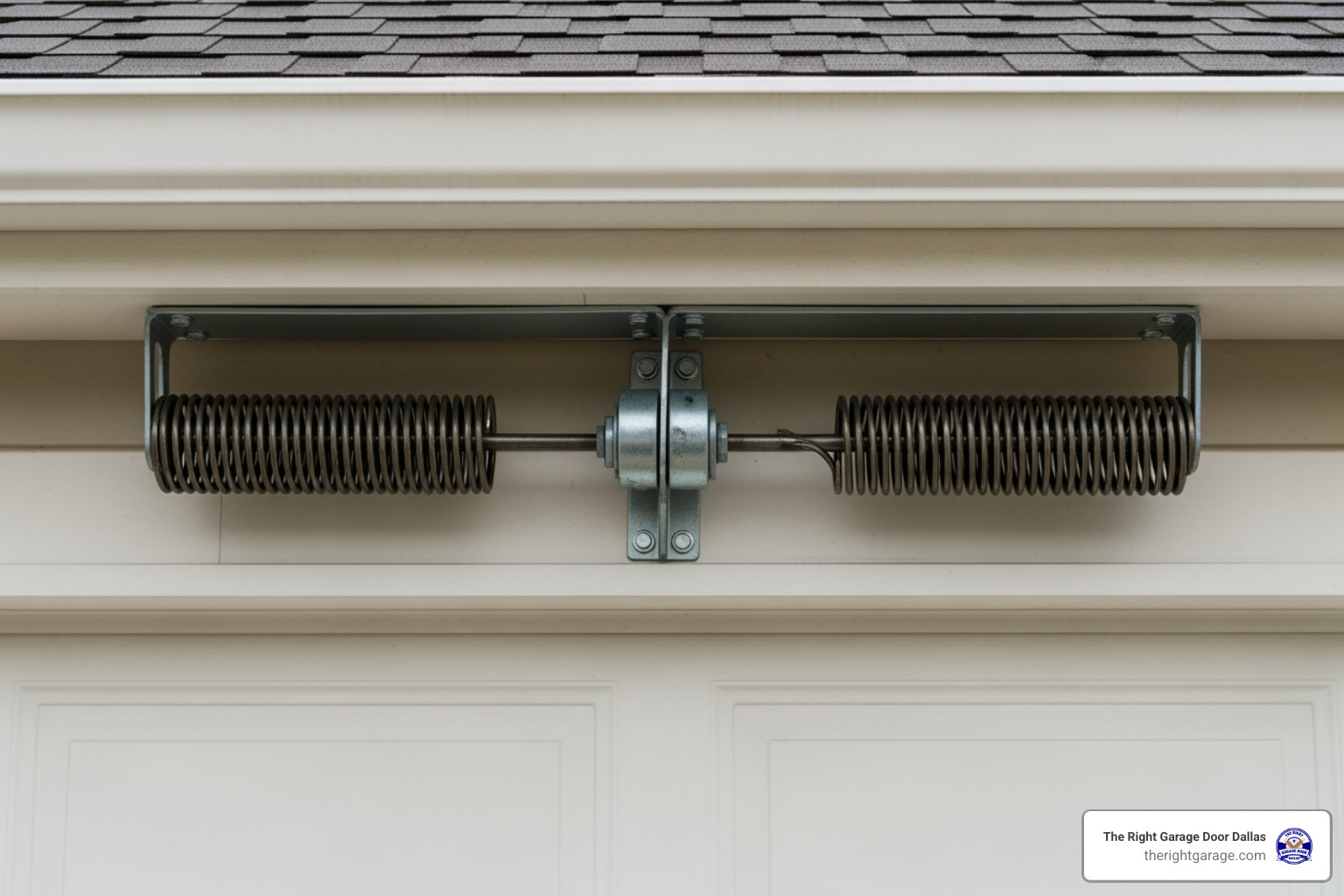
Torsion springs are the modern standard and are found on the metal shaft directly above the garage door opening. They work by twisting (torque). When the door closes, the springs wind up, storing energy. When you open the door, they unwind, releasing that energy to lift the weight.
These are generally considered safer because if they break, they stay on the shaft rather than flying across the room. However, they are under incredible tension and require specialized tools like winding bars. Because of the technical nature of these systems, many Dallas businesses trust commercial garage door repair experts for their torsion needs, as the risk of injury is substantial.
Extension Springs
Extension springs are located on the sides of the door, running parallel to the horizontal tracks. They work by stretching. These are more common in older homes or smaller single-car garages.
A critical safety feature for extension springs is the safety cable. This cable runs through the center of the spring and is anchored to the wall or track. Without this cable, a snapping extension spring becomes a high-velocity projectile that can easily go through a car window or cause fatal injuries. If you are a member of the DIY community, you might find more technical discussions on Stack Internal Knowledge at work, but “knowing” isn’t the same as “doing” safely.
How to Safely Replace Both Garage Door Springs: A Step-by-Step Guide
If you are mechanically inclined and have a partner to help, you might consider a DIY approach for extension springs. We strongly discourage DIY torsion spring replacement due to the high risk of limb loss or death.
Essential Tool List
To replace both garage door springs, you will need:
- Two winding bars (for torsion) or heavy-duty pliers/wrenches (for extension)
- Vice grips or C-clamps
- Socket wrench set
- Safety goggles and leather work gloves
- An analog bathroom scale (to weigh the door)
- Silicone-based lubricant
For a full list of professional tools we use, you can view our Services page.
Measurement Accuracy
You cannot simply buy “standard” springs. Springs are color-coded and sized based on the weight of your specific door. To get the right parts:
- Wire Gauge: Measure the thickness of 10 or 20 coils and divide by that number.
- Inner Diameter: Usually 2″ or 1.75″.
- Length: Measure only the coils, not the ends.
- Wind: Determine if you need “Left Hand Wound” or “Right Hand Wound” (they are usually color-coded red and black).
For more specific guidance on extension types, refer to this guide on How to Replace Garage Door Extension Springs.
Preparing to Replace Both Garage Door Springs
Safety is the priority.
- Disconnect the Opener: Unplug the power and pull the emergency release cord (the red handle).
- Secure the Door: Place C-clamps or vice grips on the tracks just above the rollers to prevent the door from moving.
- Weigh the Door: If one spring is broken, place a scale under that side of the door and lift it slightly to get a reading. Double that number for the total door weight.
- Safety Gear: Always wear eye protection. A snapping spring releases enough energy to shatter bone.
If you have questions about the preparation phase, our FAQ covers many common homeowner concerns.
Step-by-Step Installation to Replace Both Garage Door Springs
Once prepared, the process generally follows these steps:
- Release Remaining Tension: For torsion springs, use winding bars to carefully unwind the “unbroken” spring. Never use a screwdriver or pliers for this.
- Remove Old Springs: Loosen the set screws and slide the springs off the shaft (torsion) or unhook them from the track and pulley (extension).
- Install New Coils: Slide the new springs onto the shaft, ensuring they are on the correct sides.
- Winding/Stretching: For torsion springs, wind them according to the manufacturer’s recommendation (usually 30-31 quarter turns for a 7-foot door). For extension springs, ensure the S-hooks are securely fastened.
- Pulley and Cable Replacement: This is the best time to replace worn pulleys. As noted in this Guest Post Home Repair Tutor, pulleys often fail at the same time as springs.
- Safety Cable Threading: Always thread a safety cable through the center of extension springs.
Maintenance Tips to Extend Spring Lifespan
You can’t stop time, but you can stop rust. Rust is the #1 enemy of garage door springs in the humid Texas climate.
- Lubrication: Twice a year, apply a silicone-based lubricant to the springs. This reduces friction between the coils and prevents rust buildup. Avoid WD-40, as it is a degreaser, not a long-term lubricant.
- Balance Test: Every three months, disconnect your opener and lift the door manually to waist height. If it stays in place, it’s balanced. If it falls or shoots up, your springs need adjustment.
- Tighten Hardware: Vibrations from the door moving can loosen bolts over time. Check the brackets and tracks.
- Annual Inspections: We recommend a 37-point tune-up once a year. This catches “builder shortcuts” like undersized springs before they fail.
If you notice your door is getting louder or moving slower, don’t wait. Contact us for a quick inspection.
Frequently Asked Questions about Garage Door Springs
How much does it cost to replace both garage door springs?
In the Dallas-Fort Worth area, the average cost to replace both garage door springs typically ranges from $350 to $500. This includes high-quality parts and professional labor. While you can find springs online for $60–$150, the risk of ordering the wrong size or injuring yourself often outweighs the savings. Emergency or after-hours repairs in cities like Plano or Frisco may add a $50–$100 fee. For an exact price for your door, you can Get a Free Quote online.
Can I replace torsion springs myself?
Technically, yes, but we strongly advise against it. Torsion springs store enough mechanical energy to be lethal. Over 10,000 emergency room visits per year are attributed to garage door accidents, many involving springs. Specialized winding bars and an understanding of “left-hand” vs. “right-hand” wind are required. If you’ve never done it before, the risk of the winding bar slipping and causing a skull fracture or broken hand is very real.
How long do garage door springs typically last?
Standard springs are rated for 10,000 cycles. If you use your door four times a day (a typical family morning and evening routine), they will last roughly 7 years. If you use your garage as your primary entrance or have kids playing in the driveway, you might reach that limit in 4–5 years. We offer high-cycle upgrades (25,000 to 50,000 cycles) that can last 15 to 20 years, providing much better long-term value.
Conclusion
When it comes to your home’s largest moving part, cutting corners isn’t worth the risk. Choosing to replace both garage door springs at the same time is the only way to ensure your door remains safe, balanced, and functional for years to come.
At The Right Garage Door Dallas, we specialize in taking the stress out of spring failures. Whether you’re in Dallas, Fort Worth, Richardson, or Irving, our licensed technicians offer fast, same-day service with upfront pricing and 24/7 emergency support. We don’t just fix the break; we ensure your entire system is tuned for longevity.
Don’t let a snapped spring trap your car in the garage. Schedule Professional Spring Replacement with us today and experience the peace of mind that comes with a job done right.


