

Why a Broken Garage Door Demands Your Immediate Attention
Broken garage door repair becomes urgent the moment you hear that loud bang or find your door stuck halfway. Here’s what you need to know right now:
Quick Answer: Can You Fix It Yourself?
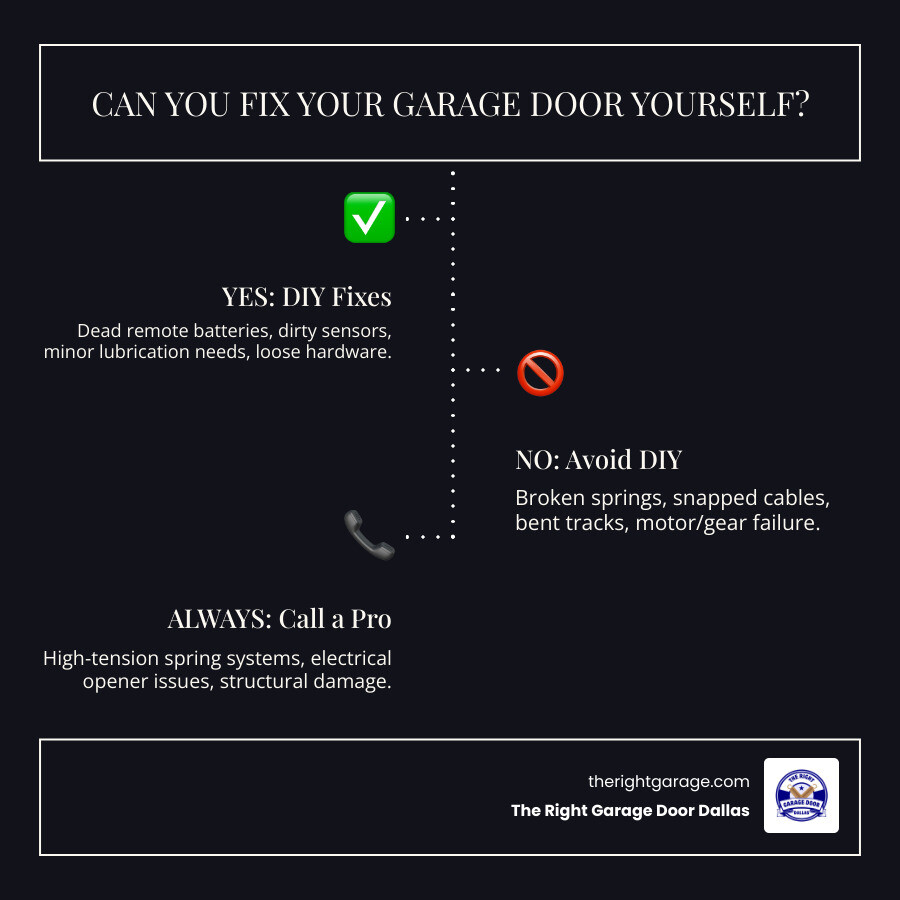
- YES, if it’s: Dead remote batteries, dirty sensors, minor lubrication needs, loose hardware
- NO, if it involves: Broken springs, snapped cables, bent tracks, motor/gear failure
- Always call a pro for: High-tension spring systems, electrical opener issues, structural damage
Your garage door is one of the largest moving parts of your home, and when it breaks, you’re facing more than just an inconvenience. You’ve lost a primary entry point, your belongings are exposed, and depending on the issue, you might be dealing with a serious safety hazard.
According to industry data, American households use their garage doors three to four times each day. That’s a lot of wear and tear on springs, cables, rollers, and openers. And when something fails, it usually happens without warning—often with a loud pop or bang that signals a broken spring.
Important Safety Warning: Garage doors are heavy (often 150-400 pounds) and operate under extreme tension. Some repairs are genuinely dangerous for DIYers. This guide will help you understand what you can safely tackle yourself and when you absolutely need professional help.
The good news? Many common garage door problems have simple fixes you can handle in minutes. Others require the tools, training, and experience of licensed technicians. We’ll help you tell the difference.
Step 1: Identify the Problem – Signs Your Garage Door Needs Repair
When your garage door acts up, it’s sending warning signs. Ignoring them can lead to bigger problems or safety risks.
A sudden, loud BANG! is one of the most serious indicators, almost certainly signaling a broken spring. This makes your door dangerously heavy. Other sounds like grinding, squealing, or popping can point to worn rollers, loose hardware, or an unbalanced door.
Next, observe the door’s movement. Is it uneven or jerky? Does it get stuck halfway, or struggle to open? This could point to issues like misaligned tracks or worn-out rollers. A crooked or unsmooth door might have a problem with its cables or tracks.
A slow response time from your opener, or the door reversing unexpectedly when trying to close, are also red flags. This is often due to obstructed or misaligned safety sensors, but it could also indicate a deeper issue with the opener’s motor. If the door isn’t closing properly, it’s a security concern that leaves your home vulnerable.
Look for visible damage like dings, dents, or cracks in the panels. For wooden doors, check for peeling paint or rot. A sagging door section often indicates deterioration. Physical damage can hinder operation and put extra strain on the entire system.
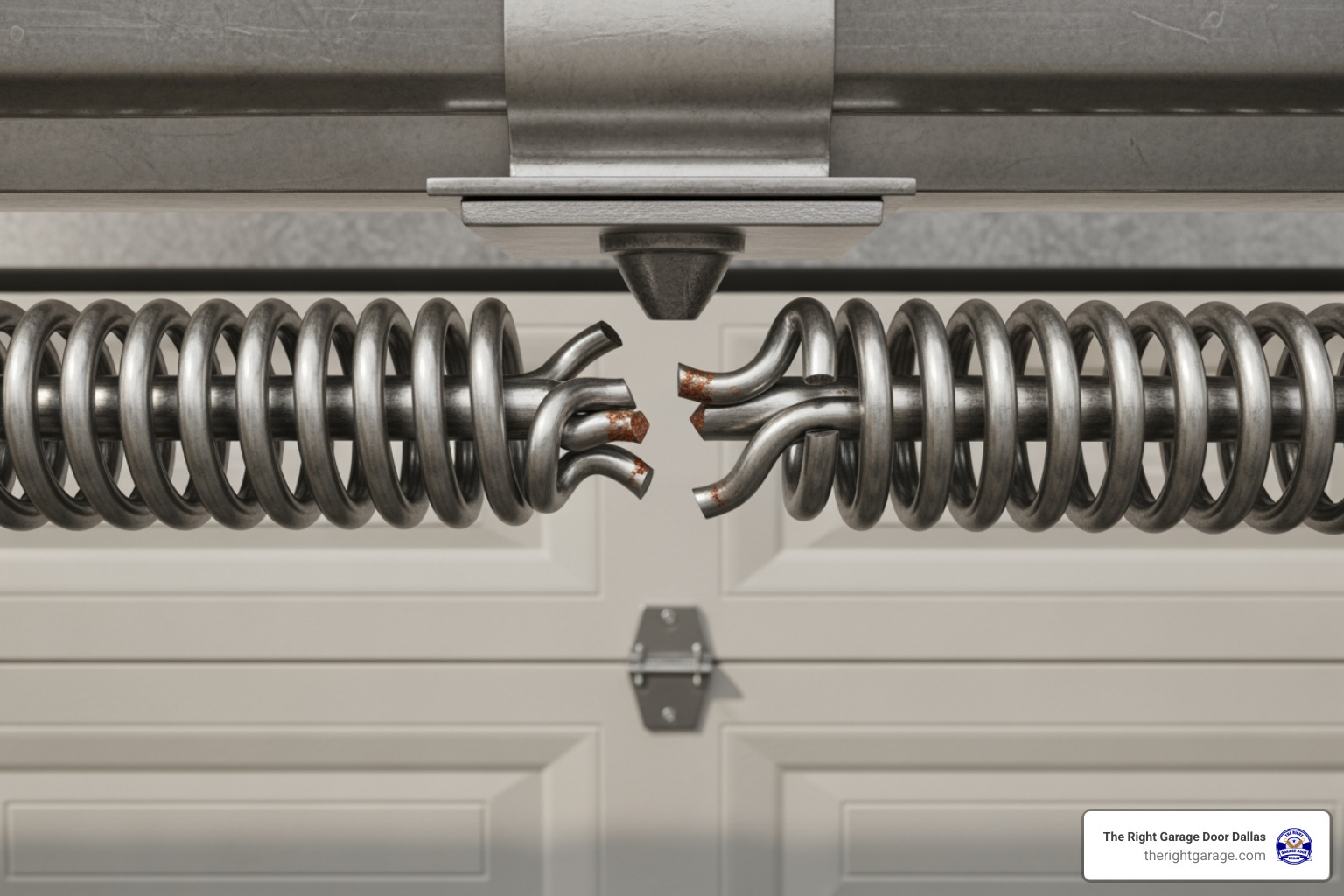
Finally, a visible gap in a torsion spring (the large spring mounted above your door) is a clear sign of a break. This critical issue requires immediate professional help.
Common Causes of Malfunction
What causes these issues? In the Dallas-Fort Worth area, we see these common culprits:
- Broken Springs: A frequent and dangerous issue. Springs are under immense tension to balance the door’s weight. They have a limited lifespan and will eventually break, often with a loud bang. Without them, the door is too heavy for the opener to lift.
- Snapped Cables: Cables work with springs to lift the door. If a cable snaps, the door can tilt, move unevenly, or fall, putting extra strain on the system and potentially bending the tracks.
- Misaligned Tracks: If the tracks guiding your door become bent or misaligned, rollers can pop out, causing the door to jam or get stuck.
- Worn-Out Rollers: Rollers help the door glide smoothly. Over time, they can wear down or crack, leading to noisy, jerky movement.
- Faulty Opener: The opener is the brain of the system. Problems can range from dead remote batteries to internal failures like worn-out motors, gears, or circuit boards.
- Obstructed Sensors: The photo-eye sensors are a crucial safety feature. If dirty, misaligned, or blocked, the door will often refuse to close or will reverse upon closing.
- Panel Damage: Dents or warping in the panels can cause the door to bind in the tracks. Major impact damage might make replacement more cost-effective than repair.
Understanding these common issues is the first step in deciding whether to DIY or call in the professionals.
Step 2: Safe DIY Troubleshooting & Simple Fixes
While many broken garage door repair tasks are for pros, you can safely troubleshoot some common issues yourself. Before starting, prioritize safety: wear gloves and goggles, work in good light, and keep the area clear of pets and children. A ladder and basic wrench set are often all you need.
How to Manually Open Your Garage Door
If the power is out or your opener is unresponsive, you’ll need to open the door manually:
- Locate the Emergency Release Cord: This is the red cord hanging from the opener’s trolley.
- Disengage the Opener: Pull the cord firmly down and back to detach the door from the opener.
- Lift the Door Carefully: You should now be able to lift the door by hand. Warning: If you suspect a broken spring, do not attempt to lift the door. It will be extremely heavy and dangerous.
- Secure the Door: If the door won’t stay open, use a C-clamp or locking pliers on the track just below a roller to hold it in place. Never leave a door partially open and unsecured.
Fixing Common Opener and Sensor Issues
Many opener problems have simple solutions, making them the easiest broken garage door repair jobs for homeowners:
- Replacing Remote Batteries: It seems obvious, but always check the remote or keypad batteries first. If a battery change requires reprogramming, a quick online search can provide tutorials.
- Cleaning Photo-Eye Sensors: If your door won’t close or reverses, the safety sensors are the likely culprit. These small devices are located about 6 inches off the ground on either side of the door. Use a soft, dry cloth to wipe any dirt or dust from the lenses.
- Checking for Obstructions: Ensure nothing is physically blocking the door’s path. Even a small toy or leaf can obstruct the sensors.
- Realigning Sensors: If cleaning doesn’t work, the sensors may be misaligned. Each sensor usually has an indicator light. You want both lights to be solid (typically green). Gently adjust the sensors until both lights are solid, indicating they are aligned.
Basic Maintenance You Can Do Yourself
Regular maintenance can extend your garage door’s life and prevent breakdowns. Here’s a basic checklist:
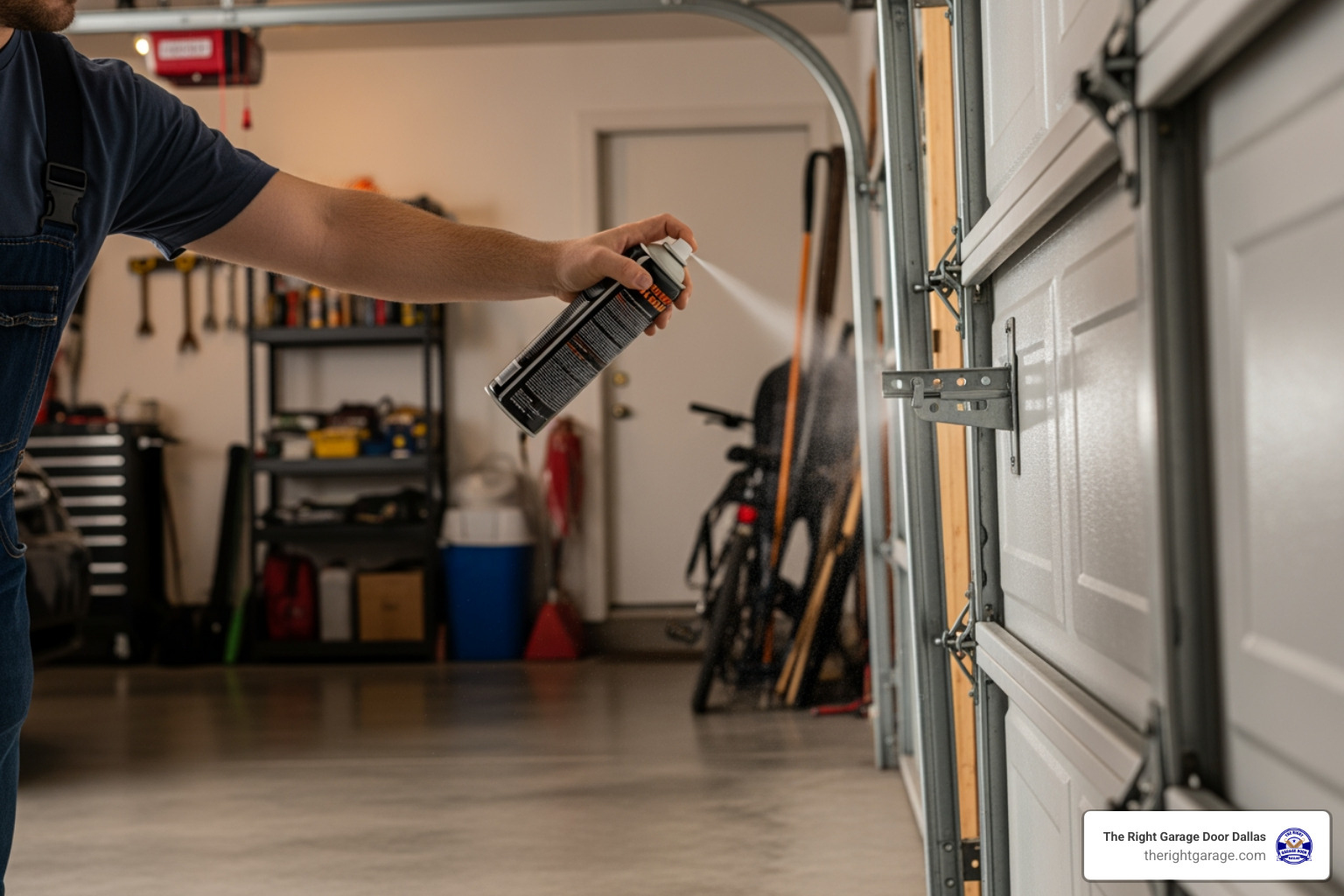
- Lubricating Moving Parts: For smooth, quiet operation, use a silicone-based lubricant (not WD-40) on rollers, hinges, and springs.
- Tightening Loose Hardware: Constant movement can loosen nuts and bolts. Periodically inspect and gently tighten hardware on the tracks, hinges, and opener bracket with a wrench.
- Testing Door Balance: An unbalanced door strains the opener. To test it, disengage the opener and lift the door halfway. If it stays put, it’s balanced. If it moves up or down, it needs professional adjustment.
Performing these simple DIY tasks can solve many minor issues, but remember to call the experts for anything more complex.
Step 3: Know Your Limits – When to Call for Professional Broken Garage Door Repair
While DIY is great for simple fixes, some broken garage door repair tasks cross into dangerous territory. Garage doors are heavy systems under extreme tension. Attempting to fix high-tension components or electrical issues without proper training and tools can lead to serious injury, property damage, or electrical shock. Due to these risks, we recommend a professional for most repairs.
Our licensed technicians in Dallas-Fort Worth are trained, equipped, and insured to handle complex repairs safely. We offer fast, local, same-day service, 24/7 emergency support, and upfront pricing, so you know what to expect.
The Dangers of Broken Garage Door Spring Repair
A loud BANG! from your garage likely means a broken spring. This is not a DIY repair; we can’t stress this enough.
Garage door springs (torsion or extension) store immense energy to counterbalance the door’s weight. When one breaks, that energy is released, making the situation dangerous. Replacing a broken spring without specialized tools is incredibly hazardous, as the spring can snap back with enough force to cause severe injury. A professional technician can safely handle the tension, install the correct spring for your door’s weight, and ensure the service is warrantied. Our team has the training to handle these high-tension components quickly and safely.
Dealing with Snapped Cables and Bent Tracks
Garage door cables are also crucial for lifting the door. If a cable snaps or comes off its drum, your door will likely tilt, get stuck, or move unevenly. A snapped cable is a safety hazard, as the door is no longer properly supported. Operating it can cause further damage. Specialists are needed for all cable repairs.
Similarly, bent or misaligned tracks can halt your garage door’s operation. If tracks are out of alignment, rollers can pop out, causing the door to jam or even fall. A door that gets stuck needs immediate professional attention. Our technicians can quickly diagnose and repair bent tracks, ensuring your door glides smoothly and safely.
Complex Opener and Panel Problems
While changing batteries is a simple DIY, other opener issues require professional expertise. Opener motor repair, gear replacement, or diagnosing circuit board issues are intricate tasks for specialists. Our technicians can often fix openers, saving you the cost of a full replacement.
Panel damage can also be complex. While minor dents may be repairable, extensive damage often requires professional attention. Our team can assess whether a panel repair or a full replacement is the most effective solution. This involves careful installation to ensure the new panel integrates seamlessly without compromising the door’s balance or integrity. For panel damage, consult specialists to discuss the best option for your door’s style and material.
Step 4: Repair vs. Replacement – Making the Right Financial Decision
At some point, every homeowner in Dallas-Fort Worth faces a tough decision: should we repair our broken garage door, or is it time for a full replacement? It’s not just about getting the door working again; it’s about making a smart financial choice that considers safety, functionality, curb appeal, and long-term value.
Several factors come into play when making this decision:
- Age of the Door: If your garage door is very old (say, over 15-20 years for the door itself, or 10+ years for the opener), parts might be harder to find, and its overall efficiency and safety features might be outdated.
- Extent of Damage: Is it a minor issue, or are multiple major components failing? A single broken spring is usually a repair, but a door with a broken spring, bent tracks, and damaged panels might be a candidate for replacement.
- Frequency of Repairs: If you’re calling us every few months for a new broken garage door repair, the cumulative cost might quickly outweigh the investment in a new, more reliable system.
- Curb Appeal and ROI: Garage doors account for about 30% of a home’s exterior. A new garage door can significantly boost your home’s curb appeal and yield a return on investment of over 90% when selling a home. This can be a compelling reason to replace, even if repairs are technically possible.
Understanding the Costs of Broken Garage Door Repair
We believe in upfront pricing with no surprises. Here’s a general idea of what common garage door repairs might cost, based on industry averages (these are estimates and can vary based on specific parts, labor, and location within the Dallas-Fort Worth area):
| Repair Type | Average Cost Range |
|---|---|
| Garage Door Spring Repair | $300 – $800 |
| Garage Door Panel Repair | $300 – $1500 |
| Garage Door Opener Repair | $75 – $300 |
| Opener Motor Repair | $200 – $300 |
These estimates cover parts and labor for common issues. For instance, panel repair can be at the higher end if a full panel replacement is needed rather than just a patch. Our service calls typically include a diagnostic fee, which is then often applied to the repair cost if you proceed with us.
When is a Full Replacement a Better Investment?
Sometimes, a complete replacement just makes more sense in the long run. Here’s when we might recommend swapping out your old door for a brand new one:
- Multiple Failing Parts: If your door has a combination of issues – say, a broken spring, worn-out opener, and several damaged panels – the cost of individual repairs can quickly approach or exceed the cost of a new door.
- Outdated, Unsafe Model: Older garage doors may lack modern safety features like auto-reverse mechanisms or advanced sensors. If your door poses a safety risk, especially to children or pets, a new door is a wise investment.
- Improving Energy Efficiency: Many older doors are uninsulated or poorly insulated. A new, insulated garage door can significantly improve your home’s energy efficiency, helping to keep your garage cooler in the Texas heat and warmer during our occasional cold snaps. This can translate to noticeable savings on your utility bills.
- Enhancing Home Value: As mentioned, a new garage door offers an excellent return on investment, often over 90% when selling a home. If you’re looking to boost your property’s value and curb appeal, a modern, stylish garage door can make a huge difference. If you’ve driven into your garage door and it’s heavily dented, getting a quote for a new garage door may be more cost-effective than replacing sections.
The decision to repair or replace comes down to a balance of cost, safety, functionality, and your home improvement goals. We’re always here to provide an honest assessment and upfront pricing to help you make the best choice for your Dallas-Fort Worth home.
Proactive Care: A Guide to Garage Door Maintenance
The best way to avoid broken garage door repair is prevention. Proactive maintenance extends the life of your components, ensures safe operation, and saves you from costly emergency repairs.
Texas weather, from summer heat to winter freezes, puts stress on garage doors. Temperature swings and moisture cause wear on parts. Regular lubrication and inspection counteract these effects, keeping your door resilient.
For more helpful tips and advice on maintaining your garage door, we encourage you to visit our blog: Blog with more garage door tips and advice
Your Preventative Maintenance Checklist
We recommend a professional tune-up at least once a year. During this service, our technicians will inspect and lubricate all moving parts, test door balance, check safety features, and tighten all hardware.
Beyond professional service, know the typical lifespans for key components:
- Springs: Torsion springs typically last 7 to 10 years (10,000-20,000 cycles), while extension springs last 5,000-10,000 cycles. Premature failure can occur if low-quality springs were installed.
- Cables: Garage door cables last around 8 to 15 years, depending on use, weather, and maintenance.
- Self-Inspection Tips: Periodically watch your door operate. Is it smooth and quiet? Are there signs of wear? Is it balanced? Addressing small issues promptly can prevent major repairs.
Upgrading Your System: Insulated Doors and Smart Technology
Consider upgrading your system for improved comfort, security, and convenience.
Benefits of Insulated Doors: An insulated garage door offers several advantages for Dallas-Fort Worth homes:
- Energy Savings: An insulated door helps regulate your garage’s temperature, which can lower energy bills.
- Noise Reduction: Insulation acts as a sound barrier, reducing outside noise.
- Improved Durability: Insulated panels are often thicker and more resistant to dents.
Smart Openers (MyQ): Smart garage door openers bring new convenience. Technology like MyQ allows you to control and monitor your garage door from your smartphone, tablet, or computer.
- Smartphone Control and Monitoring: Forgot to close the door? Check its status and close it remotely from anywhere. You can also receive alerts when the door is used.
- Improved Security Features: Many smart openers integrate with home security systems and offer features like secure in-garage delivery (e.g., Amazon Key). This adds convenience and peace of mind.
These upgrades not only improve your daily life but also contribute to your home’s overall value and appeal.
Conclusion
We’ve covered a lot about broken garage door repair, from identifying the signs of trouble to understanding when you can fix things yourself and, crucially, when to call in the experts. The key takeaways are clear: safety is paramount when dealing with garage doors, some fixes are genuinely DIY-friendly, but knowing your limits and when to call a professional is essential for your safety and the longevity of your system.
For expert help with any broken garage door repair in the Dallas-Fort Worth area, including Plano, Frisco, Richardson, Irving, Carrollton, Garland, Mesquite, Grand Prairie, and Addison, trust the licensed technicians at The Right Garage Door Dallas. We’re here with fast, local, same-day service, 24/7 emergency support, and upfront pricing to ensure your garage door is safe, functional, and reliable.
Don’t let a broken garage door compromise your home’s security or your peace of mind. For an honest assessment and professional service you can trust, reach out to us today.


